
DbcultAccessing Vault...
Director's Spotlight
Senior Film Conservator
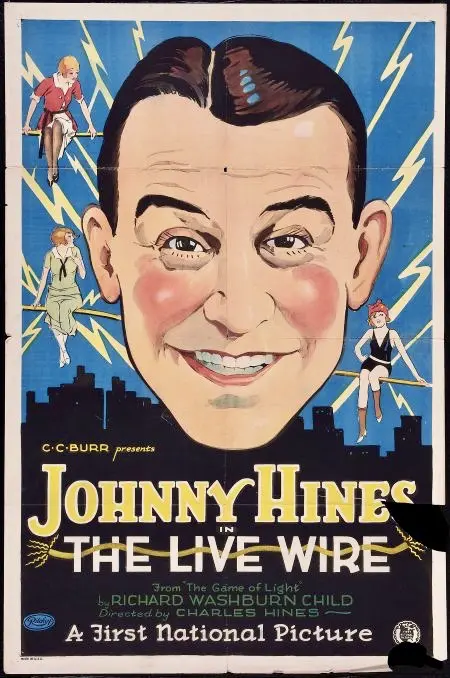
Director's Spotlight: United States
A Deep Dive into the 1925 Vision of Charles Hines
The evocative power of The Live Wire stems from the unique collaboration between the bold experimentation that has become synonymous with Charles Hines. Framed by the hauntingly beautiful landscapes of the production, it echoes the profound changes occurring in United States during that era.
In The Live Wire, Charles Hines pushes the boundaries of conventional narrative. The film's unique approach to its subject matter has sparked endless debates and interpretations among cinephiles and critics alike.
To fully appreciate The Live Wire, one must consider the cinematic climate of 1925. During this period, United States was undergoing significant artistic shifts, and Charles Hines was at the forefront of this Romance movement, often challenging established norms.
| Cinematography | High-Contrast |
| Soundtrack | Orchestral |
| Editing | Invisible |
| Art Direction | Kitsch |
Visualizing the convergence of Charles Hines's style and the core Romance narrative.
The Great Maranelli, a stunting circus clown, falls instantly in love when he sees Dorothy Langdon, who does not think too much of him and lets him know it. He is so smitten that his works suffers to the extent that he is soon just a hobo drifting along the open road. When he again encounters Dorothy, she gets him a job as a salesman with her father's light-and-power company, and proves to be a a real "live-wire" salesman. He is then put in charge of the lighting in an amusement park being built under Dorothy's supervision, and trouble comes many directions, guided by Dorothy's cad fiancée who wants to make the stock in the project worthless so he can buy it cheaply.
Decades after its release, The Live Wire remains a vital piece of the cinematic puzzle. Its influence can be seen in countless modern works, solidifying Charles Hines's status as a master of the craft in United States and beyond.