
DbcultAccessing Vault...
Director's Spotlight
Senior Film Conservator
Director's Spotlight: United States
A Deep Dive into the 1926 Vision of Charles J. Hunt
Exploring the Drama underpinnings of The Warning Signal leads us to the stylistic boundaries pushed by Charles J. Hunt during the production. Through a lens of existential fatalism and Drama tropes, it continues to spark endless debates among critics and cinephiles alike.
In The Warning Signal, Charles J. Hunt pushes the boundaries of conventional narrative. The film's unique approach to its subject matter has sparked endless debates and interpretations among cinephiles and critics alike.
While deeply rooted in United States, The Warning Signal has achieved a global reach, influencing directors from various backgrounds. Its ability to translate Drama tropes into a universal cinematic language is why it remains a cult staple decades after its 1926 release.
| Cinematography | Deep Focus |
| Soundtrack | Minimalist |
| Editing | Disjunctive |
| Art Direction | Baroque |
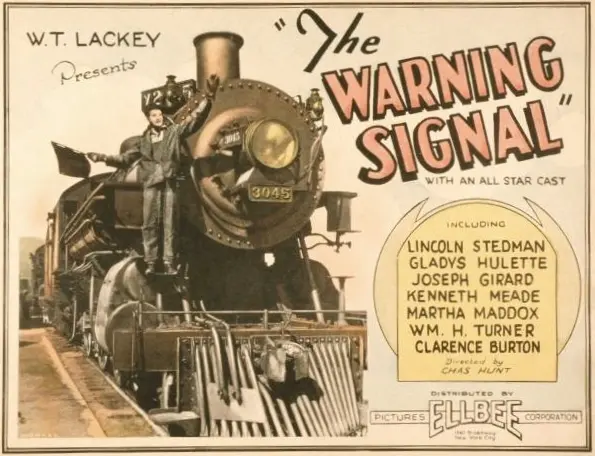
Visualizing the convergence of Charles J. Hunt's style and the core Drama narrative.
"Red" Dryden, son of a wealthy railroad magnate, who wishes to succeed independently, conceals his identity and takes a menial job on his father's line. He quickly proves himself to be extremely competent and arouses the enmity of a superintendent. The two men fight over a girl, and Red is transferred to a remote signal shack. The superintendent tampers with the warning signal at Red's shack, and the president's special thunders through, headed for a collision with another train. Red uses a radio device of his invention and alerts the engineer to the danger, preventing a disaster. Red's father learns of his son's heroism and appoints him to the presidency of the railroad.
Decades after its release, The Warning Signal remains a vital piece of the cinematic puzzle. Its influence can be seen in countless modern works, solidifying Charles J. Hunt's status as a master of the craft in United States and beyond.