
DbcultAccessing Vault...
Director's Spotlight
Senior Film Conservator
Director's Spotlight: United States
A Deep Dive into the 1926 Vision of Charles Lamont
When we examine the cinematic landscape of United States, Excess Baggage emerges as a landmark work of the enduring legacy of Charles Lamont's artistic contribution to the genre. Through a lens of existential fatalism and Short tropes, it captures a specific kind of cinematic magic that is rarely replicated.
In Excess Baggage, Charles Lamont pushes the boundaries of conventional narrative. The film's unique approach to its subject matter has sparked endless debates and interpretations among cinephiles and critics alike.
| Cinematography | Static |
| Soundtrack | Orchestral |
| Editing | Slow-Burn |
| Art Direction | Brutalist |
Visualizing the convergence of Charles Lamont's style and the core Short narrative.
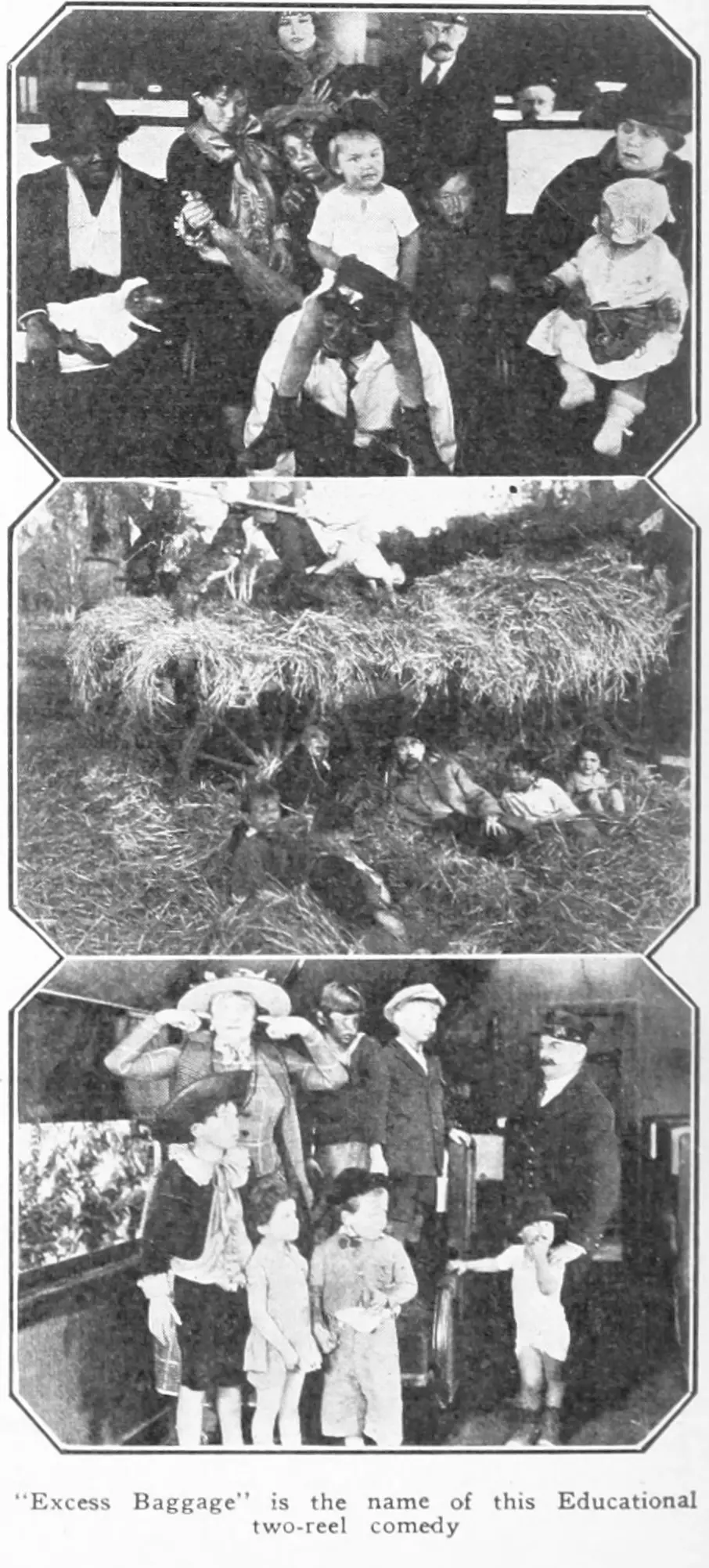
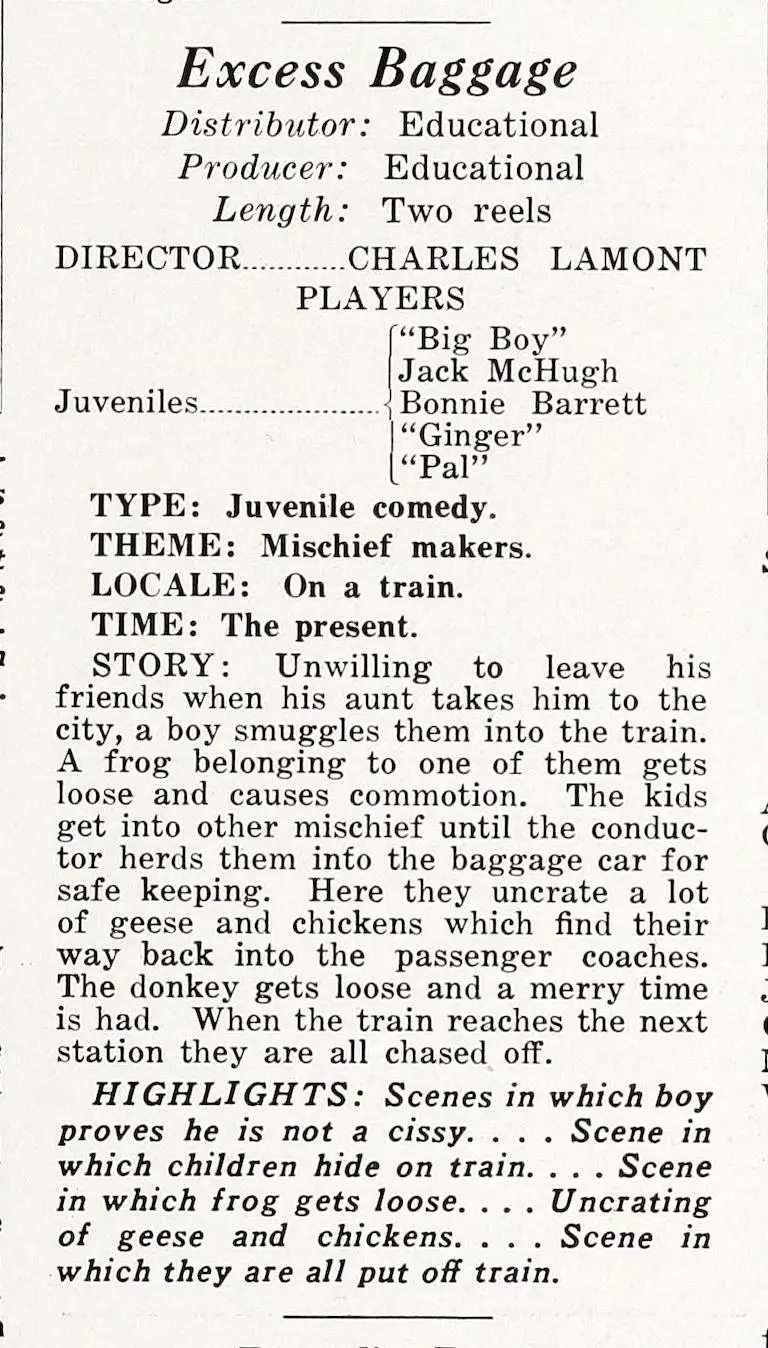
Jackie is a regular kids' kid-a "tough egg" and the main grievance he has against life is that his maiden aunt insists on dressing him in Little Lord Fauntleroy clothes-and he has to lick every kid in the neighborhood just to prove that clothes don't make the mollycoddle. With his aunt he is going to visit friends in the city and his little playmates from the country drive in to see him off on the train and to say goodbye. They bring him various presents dear to the heart of a boy-a frog and a handful of fish worms that have never been used. He hates to part with his friends and smuggles them into the car. When the train starts his aunt will not pay the fares for the youngsters and insists that they be put off the train. The conductor promises to do this at the next stop. Then Jackie's frog gets loose in the car and causes a lot of commotion when it lands on the head of a bald man. The kids get into other mischief until the conductor herd them all into the baggage car for safe keeping. They are quiet enough in the baggage car until Jackie seats himself on a porcupine and uncrates a lot of geese and chickens which find their way back into the passenger coaches. The donkey gets into the coaches and there is a merry time until the animals are finally chased back into their proper place. By this time the passengers on the train are desperate and they insist that the conductor put the kid off the train at the first stop. When the train reaches the next station they are all chased off.
Decades after its release, Excess Baggage remains a vital piece of the cinematic puzzle. Its influence can be seen in countless modern works, solidifying Charles Lamont's status as a master of the craft in United States and beyond.