
DbcultAccessing Vault...
Director's Spotlight
Senior Film Conservator
Director's Spotlight: United States
A Deep Dive into the 1927 Vision of Charles Lamont
Peeling back the layers of Charles Lamont's Grandpa's Boy exposes the technical innovation that Charles Lamont introduced to the Comedy format. Driven by an uncompromising commitment to Comedy excellence, it stands as the definitive 1927 statement on Comedy identity.
In Grandpa's Boy, Charles Lamont pushes the boundaries of conventional narrative. The film's unique approach to its subject matter has sparked endless debates and interpretations among cinephiles and critics alike.
The visual language of Grandpa's Boy is defined by its use of shadows and framing, a hallmark of Charles Lamont's style. By utilizing a 1927-era palette, the film creates an immersive experience that perfectly complements its Comedy themes.
| Cinematography | Handheld |
| Soundtrack | Synth-Heavy |
| Editing | Disjunctive |
| Art Direction | Baroque |
Visualizing the convergence of Charles Lamont's style and the core Comedy narrative.
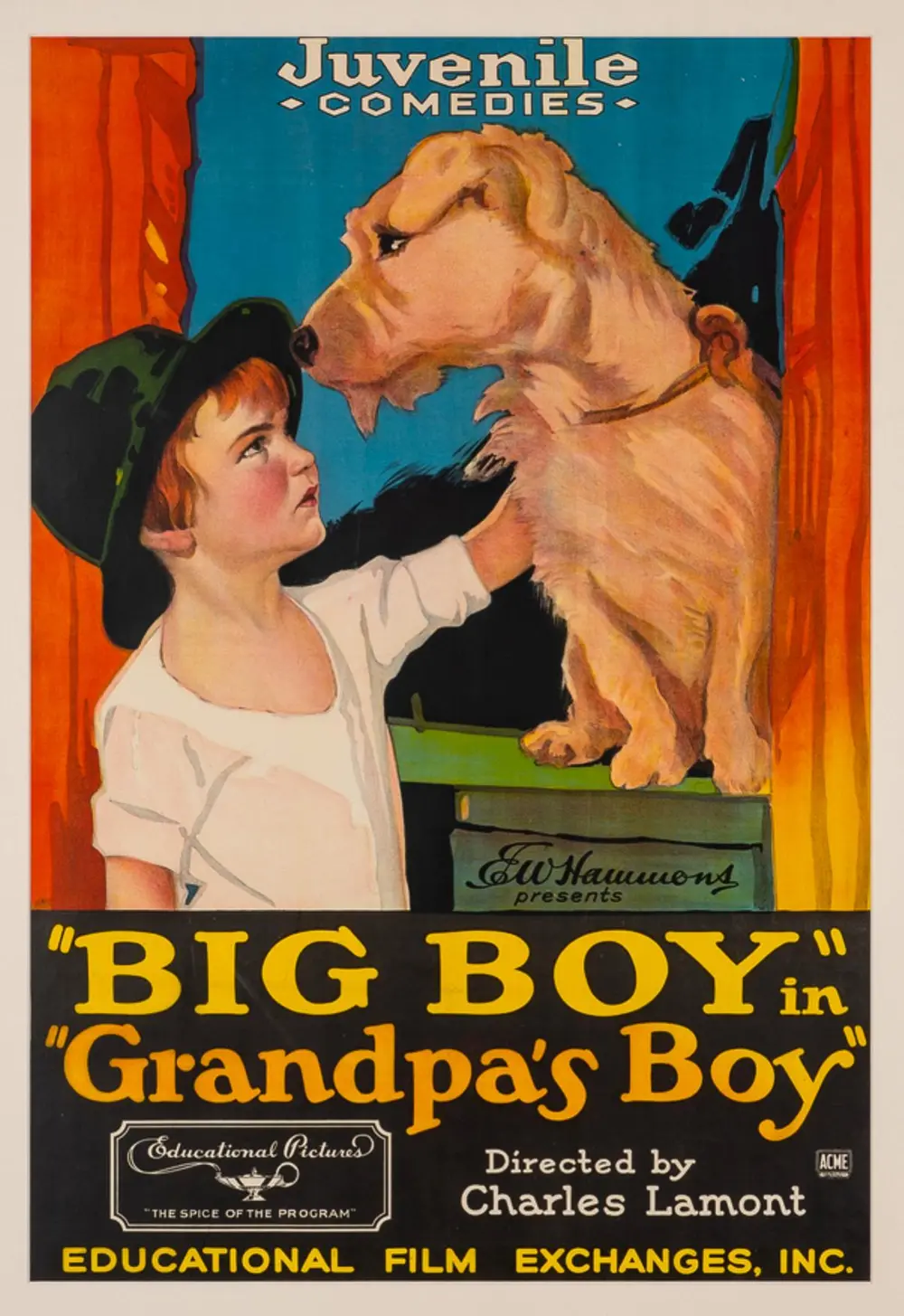
A millionaire, alone in his big house except for his servants, receives a letter notifying him that his grandson, Big Boy, has been cared for by a poor family ever since his birth and that the law now demands that he, as the only living relative of the child, assume the care of it. The rich man protests, but it is the law, he sends his chauffeur and his secretary-butler for the infant. Big Boy is found at the widow's home, surrounded by his friends, the widow's children. When he is told that he must go to his grandfather's house to live he is heart-broken. He kisses all his playmates farewell, not forgetting his animal friends-the cows, chickens and the pigs. It is a real blow when he is told that he must leave Mutt, his dog, behind. But Mutt outwits everybody and steals a ride on the top of the big car. He is discovered and thrown off, only to catch a ride on the rear bumpers. When they arrive at the millionaire's home, the dog is thickly covered with dust and soot from the exhaust of the car. Big Boy angers his grandpa first by accidentally stepping inside his silk hat. Then he gets tangled up in the hat rack and has to cry for help. The millionaire regards the child coldly but is very nearly won by Big Boy's smile when the dog enters. Mutt jumps into grandpa's lap, covering him with dust and soot, and then chases the parrot all over the house. This soon has the house in an uproar and throws his grandfather into a terrible mood. Big Boy follows him, tracking soot and mud all over the rugs and carpets, throwing the servant into a rage. But again the millionaire's heart is softened by the child, and the picture closes with Big Boy safely established as a member of the household.
Decades after its release, Grandpa's Boy remains a vital piece of the cinematic puzzle. Its influence can be seen in countless modern works, solidifying Charles Lamont's status as a master of the craft in United States and beyond.