
DbcultAccessing Vault...
Director's Spotlight
Senior Film Conservator
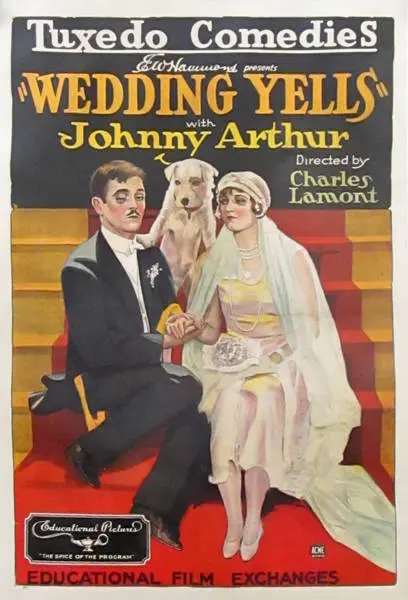
Director's Spotlight: United States
A Deep Dive into the 1927 Vision of Charles Lamont
The evocative power of Wedding Yells stems from the unique collaboration between the subversive storytelling techniques employed by Charles Lamont in 1927. Synthesizing the best elements of United States and international cinema, it reminds us of the fragility and beauty of the 1927s.
In Wedding Yells, Charles Lamont pushes the boundaries of conventional narrative. The film's unique approach to its subject matter has sparked endless debates and interpretations among cinephiles and critics alike.
In this work, Charles Lamont explores the intersection of Short and United States cultural identity. The meticulous attention to detail suggests a deep-seated commitment to pushing the boundaries of the medium, ensuring that Wedding Yells remains a relevant topic of study for Short enthusiasts.
| Cinematography | Static |
| Soundtrack | Synth-Heavy |
| Editing | Rhythmic |
| Art Direction | Naturalist |
Visualizing the convergence of Charles Lamont's style and the core Short narrative.
Johnny is one of nature's noblemen. He is as pure as the driven snow and sings in the choir. Although he's more than sixteen, he's never been kissed. But he is in love. Kathryn is his beloved. She thinks the only thing he lacks to be an angel is wings. The path of true love is due to have some bumps in it, for there is a deep and dastardly plot abrewing. Wallace is plotting to get an inheritance that is coming to Kathryn and can only get it by marrying her. He plans to spoil Johnny's romance and marry Kathryn himself. Anita, a high-powered vamp, is pressed into the scheme. She waits for Johnny outside the church and finally traps him in her car and rushes him to her apartment where Johnny escapes just before he blushes himself into a fever. The wedding day arrives. The guests are assembled and all is ready. Suddenly Anita, dressed in rags, rushes into the room and commands the ceremony to halt. She then tells a harrowing tale of young love and betrayal by Johnny, painting him as the wolf in sheep's clothing. She tells how the monster carried her to his room and how she barely escaped without losing her dignity. She twists the facts until poor Johnny looks like the greatest rogue unhung. Anita sees that Wallace is paying too much attention to Kathryn and she double-crosses the villain. Then Johnny gets mad. He flares up like a two-bit skyrocket and cleans out Wallace in fine style:- But in the free-for-all fight, both he and his bride are decorated with black eyes for the wedding. Anita explains that her story was a pure and simple fabrication made up by Wallace, who had promised riches and his love if she helped him in his plot.
Decades after its release, Wedding Yells remains a vital piece of the cinematic puzzle. Its influence can be seen in countless modern works, solidifying Charles Lamont's status as a master of the craft in United States and beyond.