
DbcultAccessing Vault...
Director's Spotlight
Senior Film Conservator
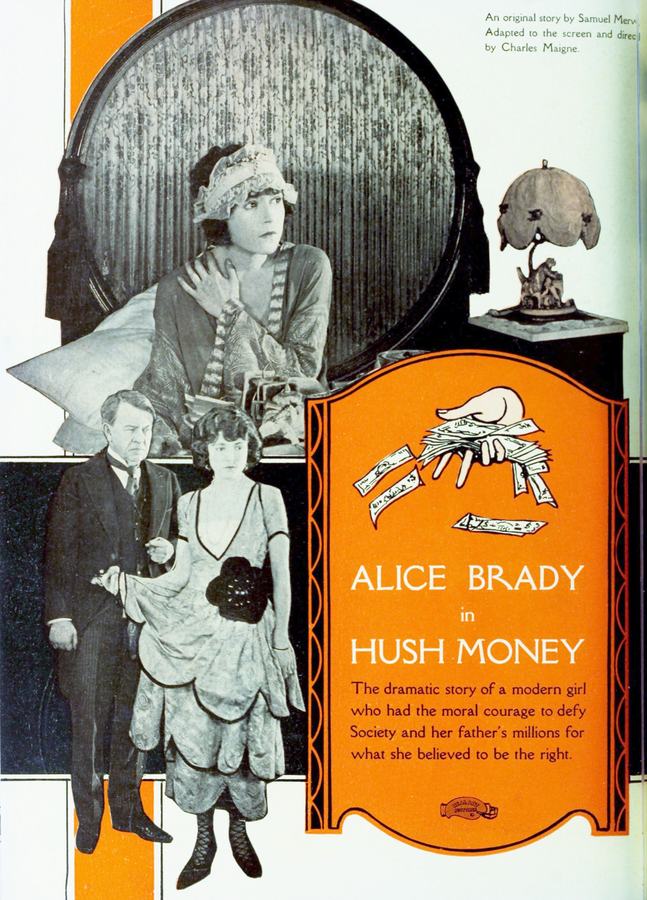
Director's Spotlight: United States
A Deep Dive into the 1921 Vision of Charles Maigne
Few works in United States cinema carry the same weight as Hush Money, especially regarding the technical innovation that Charles Maigne introduced to the Drama format. Subverting the expectations of the typical 1921 audience, it bridges the gap between traditional Drama and contemporary vision.
In Hush Money, Charles Maigne pushes the boundaries of conventional narrative. The film's unique approach to its subject matter has sparked endless debates and interpretations among cinephiles and critics alike.
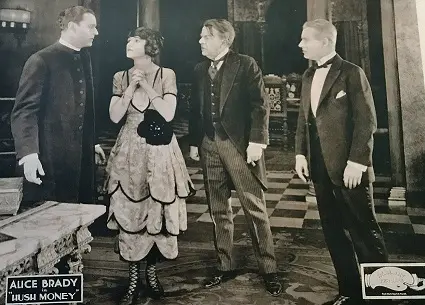
In this work, Charles Maigne explores the intersection of Drama and United States cultural identity. The meticulous attention to detail suggests a deep-seated commitment to pushing the boundaries of the medium, ensuring that Hush Money remains a relevant topic of study for Drama enthusiasts.
| Cinematography | Noir-Inspired |
| Soundtrack | Synth-Heavy |
| Editing | Disjunctive |
| Art Direction | Baroque |
Visualizing the convergence of Charles Maigne's style and the core Drama narrative.
The only daughter of wealthy Wall Street banker, Evelyn Murray, while with her aristocratic fiancé, Bert Van Vliet, runs down and injures newsboy Terry McGuire. To avoid an embarrassing outcome, Bert persuades her to flee the scene of the accident. Evelyn is conscience-stricken and informs her father; he is then forced to pay "hush money" to a garage attendant who has witnessed the accident. That evening Murray gives a dinner to honor John Deems, Bishop of New York, to whom he plans to contribute money for a youth foundation. Influenced by the bishop, Evelyn goes to the hospital, becomes acquainted with the injured boy, and arranges for his care. Opposed by her father and fiancé, Evelyn disappears and is reconciled to them only when they agree to adopt a less arrogant attitude toward their money and power.
Decades after its release, Hush Money remains a vital piece of the cinematic puzzle. Its influence can be seen in countless modern works, solidifying Charles Maigne's status as a master of the craft in United States and beyond.