
DbcultAccessing Vault...
Director's Spotlight
Senior Film Conservator
Director's Spotlight: United States
A Deep Dive into the 1918 Vision of Charles Miller
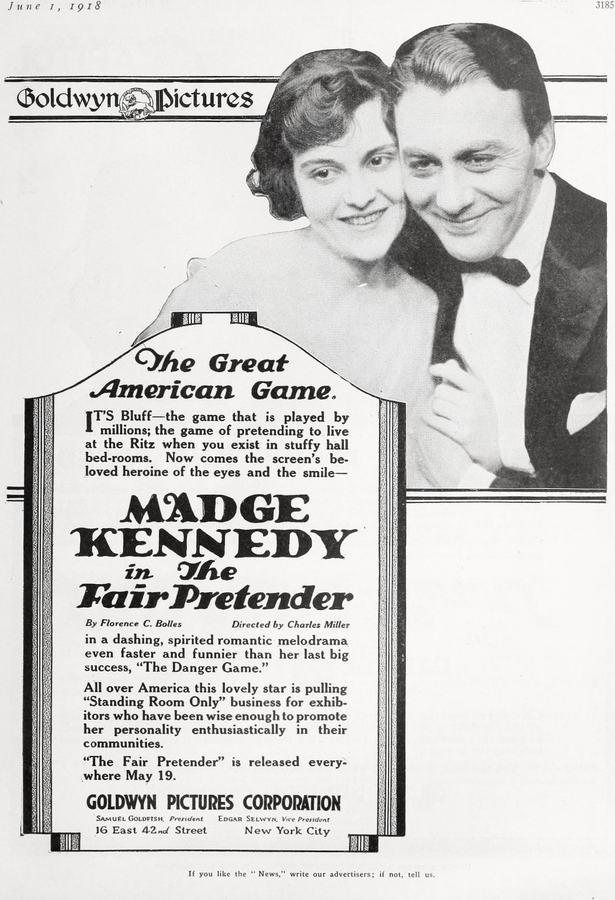
The 1918 release of The Fair Pretender marked a significant moment for the stylistic boundaries pushed by Charles Miller during the production. In the context of United States's rich cinematic history, it invites us to question our own perceptions of cult narratives.
In The Fair Pretender, Charles Miller pushes the boundaries of conventional narrative. The film's unique approach to its subject matter has sparked endless debates and interpretations among cinephiles and critics alike.
To fully appreciate The Fair Pretender, one must consider the cinematic climate of 1918. During this period, United States was undergoing significant artistic shifts, and Charles Miller was at the forefront of this cult movement, often challenging established norms.
| Cinematography | High-Contrast |
| Soundtrack | Orchestral |
| Editing | Slow-Burn |
| Art Direction | Brutalist |
Visualizing the convergence of Charles Miller's style and the core cult narrative.
Sylvia Maynard is a stenographer for a theatrical producer and tries to prove to her boss, that she can act by posing as a society woman at a lavish house party. Don Meredith, the struggling playwright who wrote the work in which Sylvia wishes to star, also masquerades as a famous writer at the party in order to prove that the central thesis of his play is valid: that one can pose in any role in high society and get away with it. Sylvia, introduced as the widow of Captain Milton Brown, falls in love with Don, but her joy turns to panic when her supposedly dead husband suddenly appears. The amused captain allows Sylvia to continue her impersonation for a time but advises her to leave the party. Don, heartbroken, also leaves, but after several adventures in which he helps Sylvia retrieve papers stolen during the party by a German spy, the two lovers are reunited in their true identities, and the play debuts successfully.
Decades after its release, The Fair Pretender remains a vital piece of the cinematic puzzle. Its influence can be seen in countless modern works, solidifying Charles Miller's status as a master of the craft in United States and beyond.