
DbcultAccessing Vault...
Director's Spotlight
Senior Film Conservator
Director's Spotlight: United States
A Deep Dive into the 1916 Vision of Charles Swickard
Analyzing The Captive God (1916) requires a deep dive into the defining moment in cult history that Charles Swickard helped create. Defining a new era of United States artistic expression, it transcends regional boundaries to tell a universal story.
In The Captive God, Charles Swickard pushes the boundaries of conventional narrative. The film's unique approach to its subject matter has sparked endless debates and interpretations among cinephiles and critics alike.
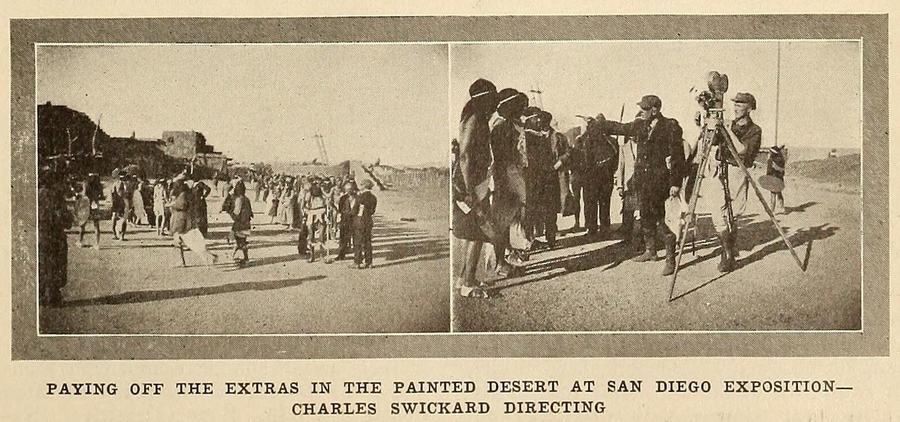
The visual language of The Captive God is defined by its use of shadows and framing, a hallmark of Charles Swickard's style. By utilizing a 1916-era palette, the film creates an immersive experience that perfectly complements its cult themes.
| Cinematography | Noir-Inspired |
| Soundtrack | Minimalist |
| Editing | Disjunctive |
| Art Direction | Baroque |
Visualizing the convergence of Charles Swickard's style and the core cult narrative.
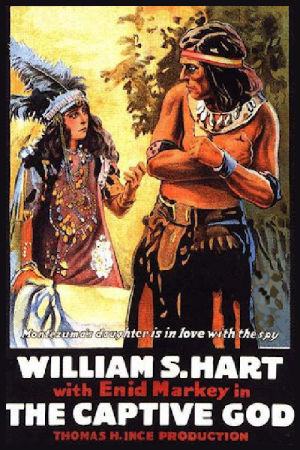
The picture tells the story of a little Spanish boy who is cast upon the shore of the east coast of Mexico early in the sixteenth century, when Mexico was dominated by the Aztec Indians. Never having seen a white person before, the local natives, a tribe called Tehuans, bring him up as a god and call him Chiapa. When he reaches manhood, Chiapa is given authority over his entire tribe. He falls in love with the priestess, Tecolote, and she yields to his advances although she is quite unworthy of him, and encourages other suitors. Then the Aztecs hear that under the white god the Tehuans are very prosperous, and start forth to conquer them. The Aztec army is under command of Mexitli, the chief general of Montezuma, the Emperor, and having conquered the Tehuans, he carried off Tecolote as his personal slave. Chiapa follows as a spy. In the garden of Montezuma, he is wounded by a guard, but Lolomi, the beautiful daughter of the Emperor, saves him. They fall in love. Meanwhile Mexitli has tired of Tecolote, and now seeks the hand of the Princess Lolomi, who would rather die than have him. As the Emperor gives Mexitli his consent, he tries to get the princess by force, and in doing so discovers Chiapa. Luiapa is sentenced to die at the end of the year on the sacrificial stone. But Lolomi, finding her pleas to her father of no avail, sends word to the Tehuans that their god is captive. An avenging army sweeps down, and there is brought about a sequence of thrilling scenes with a smashing finish.
Decades after its release, The Captive God remains a vital piece of the cinematic puzzle. Its influence can be seen in countless modern works, solidifying Charles Swickard's status as a master of the craft in United States and beyond.