
DbcultAccessing Vault...
Director's Spotlight
Senior Film Conservator
Director's Spotlight: United States
A Deep Dive into the 1917 Vision of Charles Swickard
To understand the modern evolution of United States film, one must first look at The Gates of Doom and the collaborative alchemy between Charles Swickard and the 1917 creative team. Subverting the expectations of the typical 1917 audience, it remains a vital reference point for anyone studying the evolution of Charles Swickard.
In The Gates of Doom, Charles Swickard pushes the boundaries of conventional narrative. The film's unique approach to its subject matter has sparked endless debates and interpretations among cinephiles and critics alike.
While deeply rooted in United States, The Gates of Doom has achieved a global reach, influencing directors from various backgrounds. Its ability to translate cult tropes into a universal cinematic language is why it remains a cult staple decades after its 1917 release.
| Cinematography | Deep Focus |
| Soundtrack | Minimalist |
| Editing | Disjunctive |
| Art Direction | Baroque |
Visualizing the convergence of Charles Swickard's style and the core cult narrative.
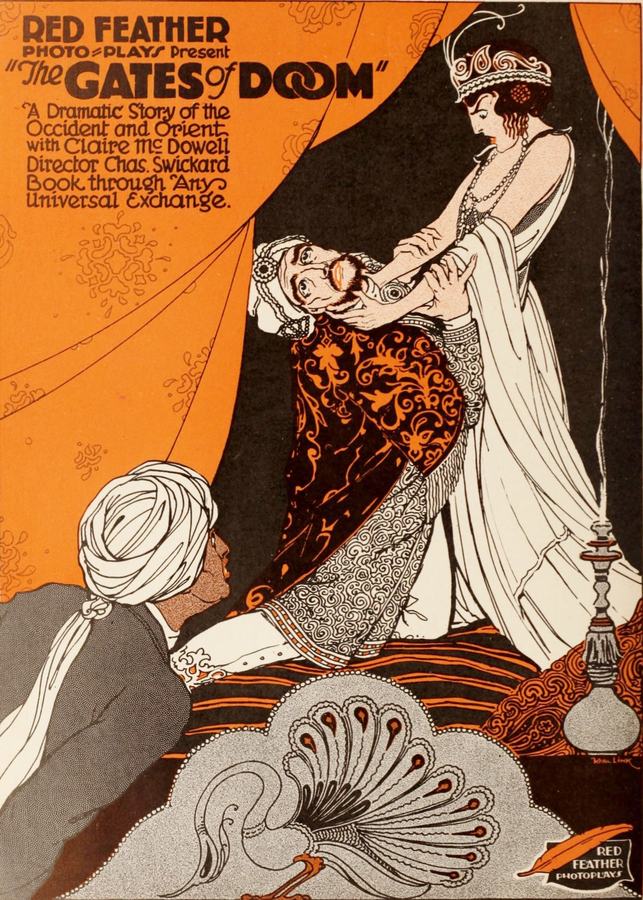
Captain Unger is relating the story of his love for the Hindoo woman, Indore, to Captain Duane and begs him if anything should happen to care for their little girl. When the officers leave the room a Hindoo sent by Indore's husband poisons the decanter of wine. Unger returns and is astonished to see Indore, who has made her way to him. He consents to take her away, drinks the wine, and falls dead. Indore lifts the glass to her lips to die with him, but it is snatched from her by the native, who carries her back to his prince. She is reduced to slavery in the harem. Duane takes the child, Agatha, to England. Agatha develops into a beautiful woman. She is reading a message from Duane with a heavy heart, for it says he is on his way with his bride, Florence, to join his father on his journey to India. En route they meet the Grand Duke Alexis, who has known Florence in the past. Alexis, perceiving that Florence is jealous of Agatha, forces her to think her husband loves the Indian girl. In India, Alexis informs Agatha her mother is not dead and that she might see her. Guided by a native, Agatha confronts the prince and asks for her mother; he parries her question. Looking at her with a lustful smile, he draws near and she retreats in terror. Struggling fiercely, the girl screams as he overpowers her. Indore hears the scream, slips into the room and stabs the prince. She recognizes her child and clasps her in her arms. Thus the guard finds them. Jang Sahib, the hunchback, rushes in when he hears the guard's shriek, and orders the native to spread the news that their prince has been murdered by an English infidel. Soon there is a riot and many white men are slain. Captain Duane, discovering that Agatha has gone to the palace, hastens with a few horsemen. Jang Sahib tells Duane Agatha is not there. Duane fights. Meanwhile Florence, convinced by Alexis of her husband's infidelity, has left on a steamer with him, leaving a note for Duane. While crossing the desert in Sahib's caravan, Indore jumps over the cliff. She is later picked up by some traders still alive, but has lost her memory. At the Walled City Sahib compels Agatha to marry him. On the wedding day she grasps him by the throat and chokes him to death. Duane, crushed by despair, shuns the haunts of white men. He wanders into a native dive, and is startled by the sight of a dancing girl. He staggers to her and, in spite of the curses of the people, leads her out. It is Indore, whom he mistakes for Agatha. She does not even remember her child's name, but when left alone in Duane's home is stabbed by the prince's servant. She is shocked into her right mind and demands to know where Agatha is imprisoned. At the head of a troop, Duane goes to the Walled City in time to snatch Agatha from the funeral pyre into which she is being forced by the subjects of the murdered Sahib. They escape and begin their journey back. Duane and Agatha are happy at seeing each other again.
Decades after its release, The Gates of Doom remains a vital piece of the cinematic puzzle. Its influence can be seen in countless modern works, solidifying Charles Swickard's status as a master of the craft in United States and beyond.