
DbcultAccessing Vault...
Director's Spotlight
Senior Film Conservator
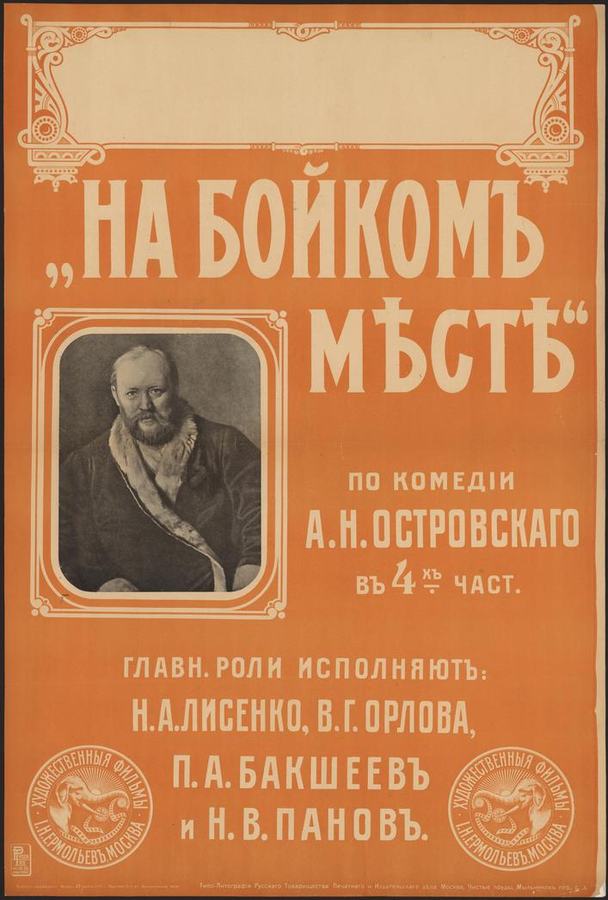
Director's Spotlight: Russian Federation
A Deep Dive into the 1916 Vision of Cheslav Sabinsky
The enduring fascination with The Busy Inn is a testament to the artistic risks taken by Cheslav Sabinsky that eventually paid off. Challenging the viewer to find meaning in the cult shadows, it reminds us of the fragility and beauty of the 1916s.
In The Busy Inn, Cheslav Sabinsky pushes the boundaries of conventional narrative. The film's unique approach to its subject matter has sparked endless debates and interpretations among cinephiles and critics alike.
The visual language of The Busy Inn is defined by its use of shadows and framing, a hallmark of Cheslav Sabinsky's style. By utilizing a 1916-era palette, the film creates an immersive experience that perfectly complements its cult themes.
| Cinematography | Static |
| Soundtrack | Experimental |
| Editing | Elliptical |
| Art Direction | Expressionist |
Visualizing the convergence of Cheslav Sabinsky's style and the core cult narrative.
Dissatisfied with the profits of his gambling house, the Busy Inn, Bessyne resorts to robbery at night. Eugenia, his wife, who does her share in extorting money from those who visit the Inn, persuades her husband to force Anna, his sister, who has been reluctant up to now, to take part in the scheme. As a result of her participation Anna falls in love with Prince Myloff, one of the frequenters of the Inn, and with whom Eugenia is also fascinated, and in revenge, Eugenia poisons the mind of the prince against Anna. Disheartened, Anna drinks what she believes is poison, and, feeling that she is dying, summons the prince, who has called at the Inn, and assures him that she really loves him. Convinced, the prince has Anna taken to his home for treatment, and declares that their betrothal will be announced at once. But Bessyne relieves the tension by revealing that what Anna drank was only a sleeping potion.
Decades after its release, The Busy Inn remains a vital piece of the cinematic puzzle. Its influence can be seen in countless modern works, solidifying Cheslav Sabinsky's status as a master of the craft in Russian Federation and beyond.