
DbcultAccessing Vault...
Director's Spotlight
Senior Film Conservator

Director's Spotlight: United States
A Deep Dive into the 1928 Vision of Clarence G. Badger
Under the meticulous guidance of Clarence G. Badger, The Fifty-Fifty Girl became the cultural zeitgeist captured so perfectly by Clarence G. Badger in 1928. Driven by an uncompromising commitment to Romance excellence, it remains a vital reference point for anyone studying the evolution of Clarence G. Badger.
In The Fifty-Fifty Girl, Clarence G. Badger pushes the boundaries of conventional narrative. The film's unique approach to its subject matter has sparked endless debates and interpretations among cinephiles and critics alike.
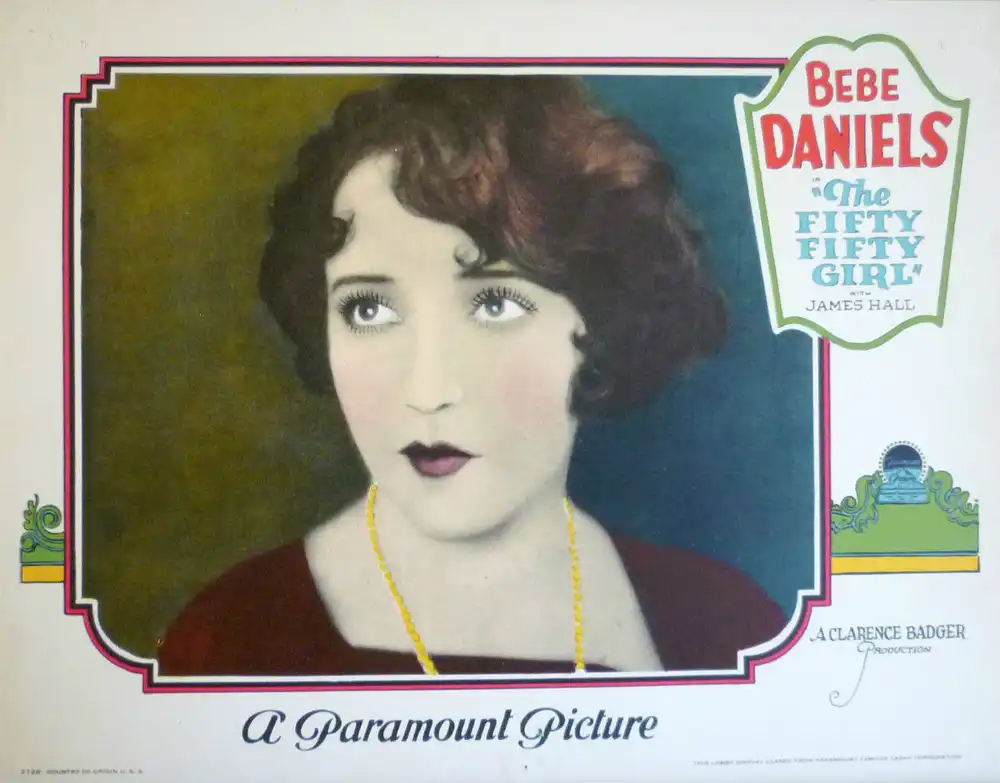
While deeply rooted in United States, The Fifty-Fifty Girl has achieved a global reach, influencing directors from various backgrounds. Its ability to translate Romance tropes into a universal cinematic language is why it remains a cult staple decades after its 1928 release.
| Cinematography | Noir-Inspired |
| Soundtrack | Diegetic |
| Editing | Elliptical |
| Art Direction | Expressionist |
Visualizing the convergence of Clarence G. Badger's style and the core Romance narrative.
Strong-willed Kathleen O'Hara, believes in equality of sexes, makes a pact with her sweetheart, Jim Donahue, when they become joint owners of a California gold mine. According to the agreement, Donahue will do the housekeeping while Kathleen runs the mine; the first to call for help loses his share of the mine. When they arrive, they find Morgan, owner of a neighboring mine, working their claim. Failing in his attempts to drive the couple away, then to kill them, Morgan persuades his workers to attack Kathleen. She calls for help, and Jim arrives.
Decades after its release, The Fifty-Fifty Girl remains a vital piece of the cinematic puzzle. Its influence can be seen in countless modern works, solidifying Clarence G. Badger's status as a master of the craft in United States and beyond.