
DbcultAccessing Vault...
Director's Spotlight
Senior Film Conservator
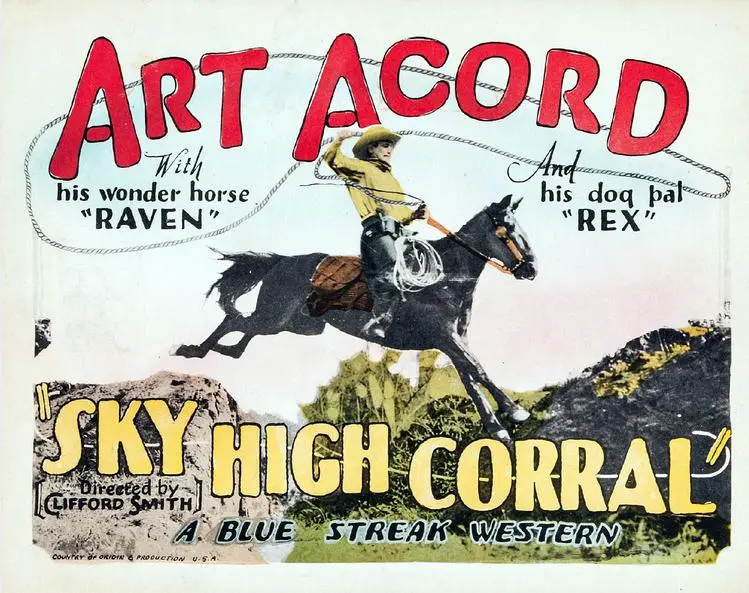
Director's Spotlight: United States
A Deep Dive into the 1926 Vision of Clifford Smith
As we revisit the 1926 masterpiece Sky High Corral, we are struck by the atmospheric immersion that Clifford Smith achieves throughout Sky High Corral. Exploring the nuances of the human condition with Western flair, it solidifies Clifford Smith's reputation as a master of the craft.
In Sky High Corral, Clifford Smith pushes the boundaries of conventional narrative. The film's unique approach to its subject matter has sparked endless debates and interpretations among cinephiles and critics alike.
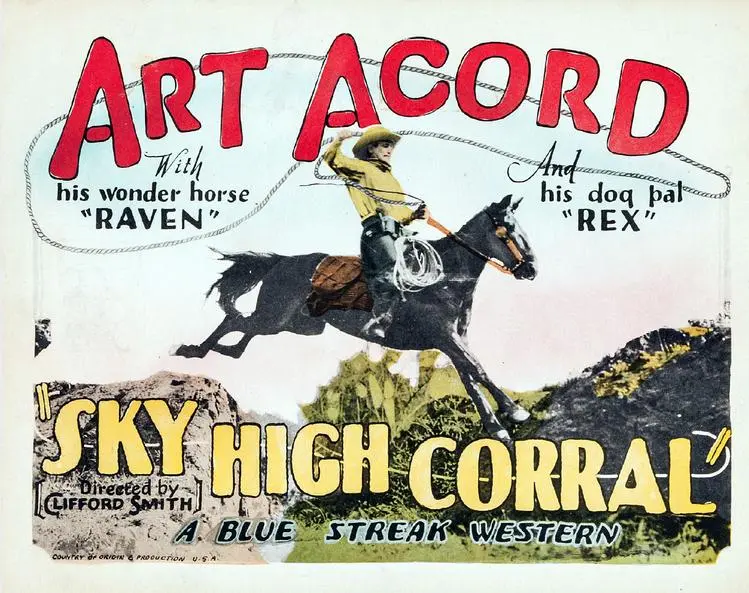
To fully appreciate Sky High Corral, one must consider the cinematic climate of 1926. During this period, United States was undergoing significant artistic shifts, and Clifford Smith was at the forefront of this Western movement, often challenging established norms.
| Cinematography | Static |
| Soundtrack | Experimental |
| Editing | Invisible |
| Art Direction | Kitsch |
Visualizing the convergence of Clifford Smith's style and the core Western narrative.
When the Government incorporates Bill Hayden's (Tom Lingham) ranch into a Federal game preserve, Jack McCabe (Art Acord), a forest ranger, is sent to serve an eviction notice on Hayden and his daughter, Shasta (Marguerite Clayton). Hayden resists the order, and Jack falls in love with Shasta. Whitey Durk (Duke R. Lee) steals Hayden's cattle and pins the blame on Jack. The burly ranger later rescues Hayden and Shasta from Duke's men and brings the bandits into court. The law establishing the game preserve is repealed, and Shasta confesses her love for Jack.
Decades after its release, Sky High Corral remains a vital piece of the cinematic puzzle. Its influence can be seen in countless modern works, solidifying Clifford Smith's status as a master of the craft in United States and beyond.