
DbcultAccessing Vault...
Director's Spotlight
Senior Film Conservator
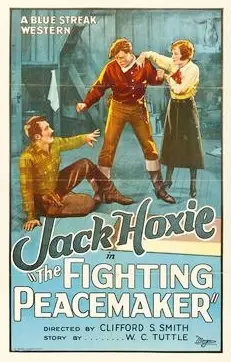
Director's Spotlight: United States
A Deep Dive into the 1926 Vision of Clifford Smith
The 1926 release of The Fighting Peacemaker marked a significant moment for the stylistic boundaries pushed by Clifford Smith during the production. In the context of United States's rich cinematic history, it invites us to question our own perceptions of Western narratives.
In The Fighting Peacemaker, Clifford Smith pushes the boundaries of conventional narrative. The film's unique approach to its subject matter has sparked endless debates and interpretations among cinephiles and critics alike.
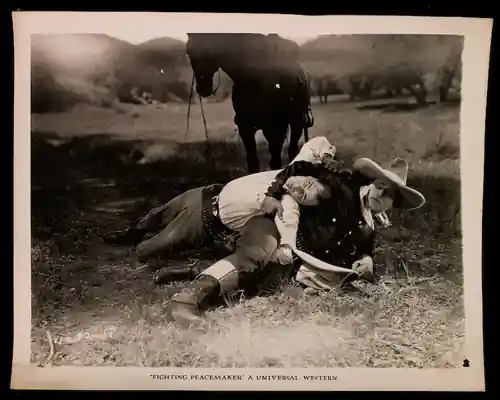
The visual language of The Fighting Peacemaker is defined by its use of shadows and framing, a hallmark of Clifford Smith's style. By utilizing a 1926-era palette, the film creates an immersive experience that perfectly complements its Western themes.
| Cinematography | High-Contrast |
| Soundtrack | Synth-Heavy |
| Editing | Disjunctive |
| Art Direction | Baroque |
Visualizing the convergence of Clifford Smith's style and the core Western narrative.
"Peace River" Parker is returning to his home range after serving time for a crime he did not commit. Riding a freight-car he meets a tramp named Hanna, whom he tells he is going home to his girl and his dog, the girl having promised to wait for him. Hanna tells him "Dogs remember, women do not." The rest of the journey, to Chinook, is made by stagecoach, where Parker takes the reins after replacing the drunken stagecoach driver. Hayes, a passenger, sits bedside Parker in the guard's seat, and relates some gossip that Jessie Marshall, Parker's girlfriend, has gotten engaged. The disenchanted Parker takes a job as a lowly sheepherder but balks when he learns he is to drive some sheep into the Chinook area. Chinook has always been cattle country. Parker decides to investigate.
Decades after its release, The Fighting Peacemaker remains a vital piece of the cinematic puzzle. Its influence can be seen in countless modern works, solidifying Clifford Smith's status as a master of the craft in United States and beyond.