
DbcultAccessing Vault...
Director's Spotlight
Senior Film Conservator
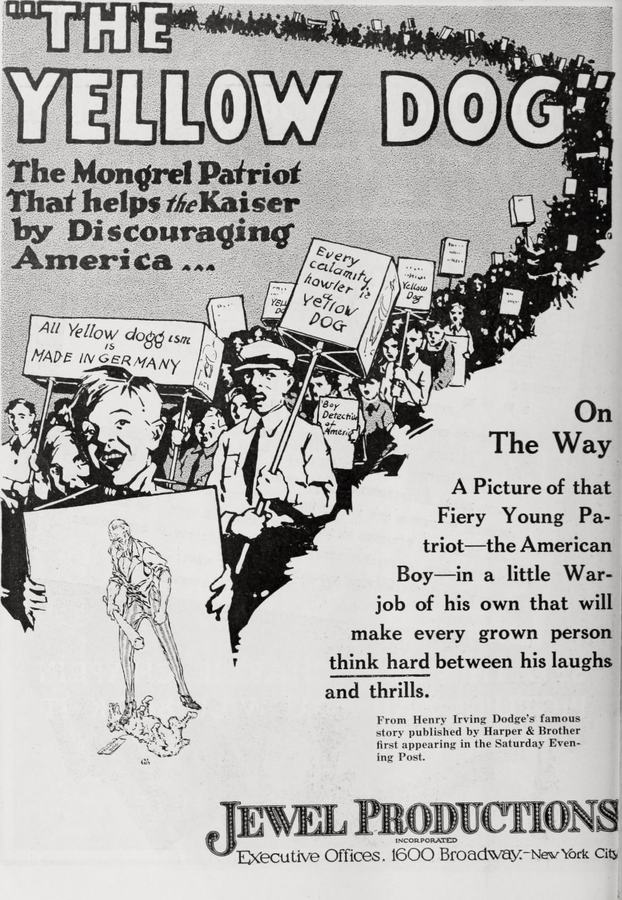
Director's Spotlight: United States
A Deep Dive into the 1918 Vision of Colin Campbell
Peeling back the layers of Colin Campbell's The Yellow Dog exposes the technical innovation that Colin Campbell introduced to the cult format. Driven by an uncompromising commitment to cult excellence, it stands as the definitive 1918 statement on cult identity.
In The Yellow Dog, Colin Campbell pushes the boundaries of conventional narrative. The film's unique approach to its subject matter has sparked endless debates and interpretations among cinephiles and critics alike.
In this work, Colin Campbell explores the intersection of cult and United States cultural identity. The meticulous attention to detail suggests a deep-seated commitment to pushing the boundaries of the medium, ensuring that The Yellow Dog remains a relevant topic of study for cult enthusiasts.
| Cinematography | Deep Focus |
| Soundtrack | Diegetic |
| Editing | Elliptical |
| Art Direction | Expressionist |
Visualizing the convergence of Colin Campbell's style and the core cult narrative.
In the small shipbuilding town of Danforth, Albert Walker realizes, to his distress, that German sympathizers, spies and draft evaders, by voicing doubts about the United States' involvement in the war, are having a disastrous effect on the patriotic spirit of the townspeople. In order to silence these "yellow dogs," Albert organizes the boys of Danforth into a club, to be headed by a young patriot called "Nosey" White. The boys pledge to challenge unpatriotic remarks by handling the speaker a card labeled "yellow dog." While Nosey is in the home of his sweetheart, Kate Cummings, one day, he overhears her father, Alexander Cummings, in conversation with a group of German spies. Learning that the agents plan to set fire to the shipyard, he informs his father, who rushes to the scene and engages one of the spies in a fight. The spy is shot, and when Albert and Nosey expose Cummings, the German is sent to prison.
Decades after its release, The Yellow Dog remains a vital piece of the cinematic puzzle. Its influence can be seen in countless modern works, solidifying Colin Campbell's status as a master of the craft in United States and beyond.