
DbcultAccessing Vault...
Director's Spotlight
Senior Film Conservator
Director's Spotlight: United States
A Deep Dive into the 1926 Vision of Del Lord
The thematic gravity of Trimmed in Gold (1926) is rooted in the historical context that Del Lord weaves into the Short fabric. Synthesizing the best elements of United States and international cinema, it highlights the importance of independent voices in United States.
In Trimmed in Gold, Del Lord pushes the boundaries of conventional narrative. The film's unique approach to its subject matter has sparked endless debates and interpretations among cinephiles and critics alike.
In this work, Del Lord explores the intersection of Short and United States cultural identity. The meticulous attention to detail suggests a deep-seated commitment to pushing the boundaries of the medium, ensuring that Trimmed in Gold remains a relevant topic of study for Short enthusiasts.
| Cinematography | Noir-Inspired |
| Soundtrack | Orchestral |
| Editing | Invisible |
| Art Direction | Kitsch |
Visualizing the convergence of Del Lord's style and the core Short narrative.
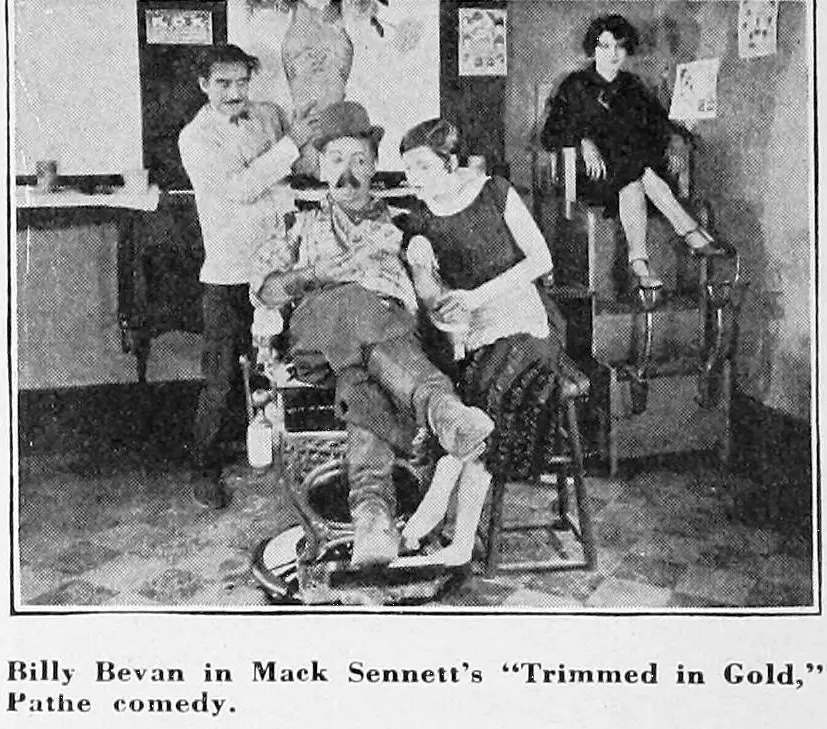
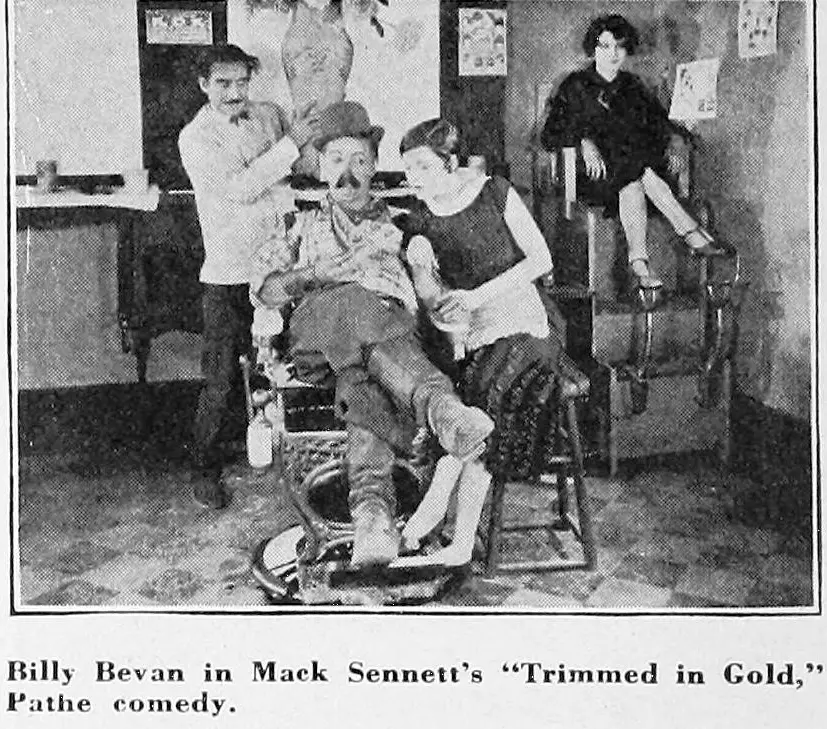
Billy and Andy are two barbers and Billy draws, as one of his customers, a big mine man from the West. He tells Billy that money can literally be scooped up from most any place around his home and with this in mind, Billy and Andy fare forth in their Ford to make their fortune. After many adventures, the pair reach the wide open spaces and start prospecting. The manicurist of the shop has also managed to reach the goal. It develops that the big mine man is, in reality, a gambler who wins his money by questionable methods. As he rakes in the pots, an assistant pours the money down a chute which leads to a vault. Billy and Andy, in their explorations, find this vault and think they have discovered a mine. Taking some of the money, they go to the gambler's room and sit in the game. Thus, the money continues to circulate - from the mine to Billy - from Billy to the gambler - and down the chute again.
Decades after its release, Trimmed in Gold remains a vital piece of the cinematic puzzle. Its influence can be seen in countless modern works, solidifying Del Lord's status as a master of the craft in United States and beyond.