
DbcultAccessing Vault...
Director's Spotlight
Senior Film Conservator
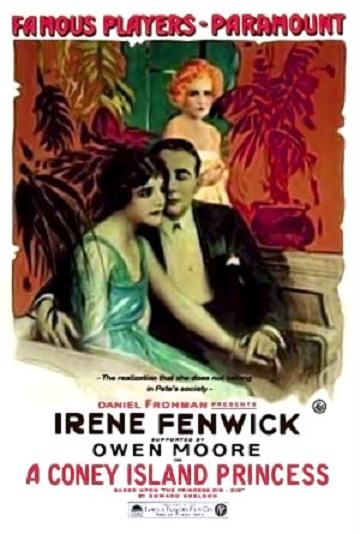
Director's Spotlight: United States
A Deep Dive into the 1916 Vision of Dell Henderson
The evocative power of A Coney Island Princess stems from the unique collaboration between the bold experimentation that has become synonymous with Dell Henderson. Framed by the hauntingly beautiful landscapes of the production, it echoes the profound changes occurring in United States during that era.
In A Coney Island Princess, Dell Henderson pushes the boundaries of conventional narrative. The film's unique approach to its subject matter has sparked endless debates and interpretations among cinephiles and critics alike.
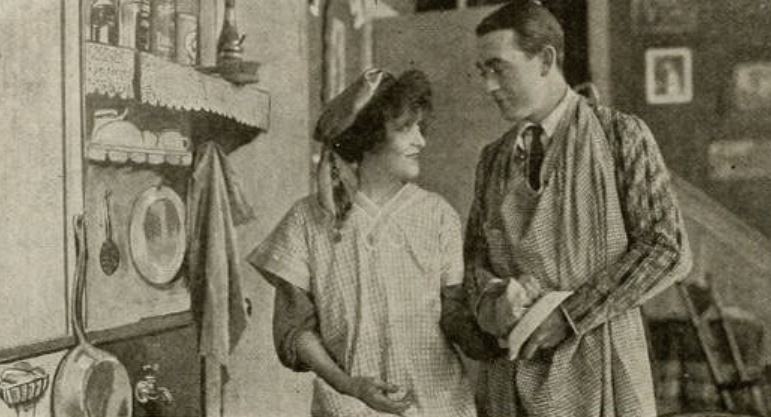
To fully appreciate A Coney Island Princess, one must consider the cinematic climate of 1916. During this period, United States was undergoing significant artistic shifts, and Dell Henderson was at the forefront of this cult movement, often challenging established norms.
| Cinematography | Handheld |
| Soundtrack | Synth-Heavy |
| Editing | Rhythmic |
| Art Direction | Naturalist |
Visualizing the convergence of Dell Henderson's style and the core cult narrative.
Among the younger members of the select families of the "Avenue," are Pete Milholland, a "good fellow" and sportsman, and his fiancée, Alice Gardner. Only once have they quarreled, that was when Pete disgraced himself by coming upon the polo fields intoxicated. This was good cause, and we now find Peter staring blankly ahead of him with the returned ring in his hand. Still in a stupor from drink, Pete instructs his butler that he is leaving for Europe and staggers out of the house. He finds himself on the shores at Coney Island, in a garb not his own. During his wanderings in the amusement park, Pete comes before the entrance of the "Turkish Dream." Partially attracted by the pretty dancer and chiefly in need of sleep, he smuggles himself into the place. He has come at the psychological moment, for the proprietor, Mooney, and his daughter, Tessie, the dancer, are in a quandary. Their orchestra, the pianist, has left them. Pete steps into the breach, much to the jealousy of Jan, the boatman, Tessie's ardent lover. As time passes Pete decides to return home, taking with him Tessie and her father. The jovial Irishman and his daughter dislike the idea of leaving their "kind," but with the arrival of the automobile they agree to go. Tessie is taken care of by Pete's aunt, who would rather do most anything than come in contact with the belle of Coney Island. Her arrival causes consternation in society circles and it is realized by Pete that she is not suitable for him, but he is determined to marry her, as Alice, according to the papers, is going to become the wife of his friend, Tony Graves. During her stay at the Milholland mansion Tessie notices how Pete controls his feelings when Alice approaches, and how Alice's heart nearly breaks when the two girls meet. Alice and Pete finally come face to face, and Pete learns that the newspaper report of Alice's marriage to Tony was false. He takes her in his arms, and thus they are discovered by Tessie. Summoning all her strength and forcing a smile upon her face, Tessie tells them that she lied and does not love Pete at all, and returns her ring. Pete is overcome to think that he was on the verge of falling into the trap set by this young "vampire," while Alice is overjoyed at the unexpected turn of events, though secretly feeling that Tessie is making a great sacrifice. After Tessie's return to her kingdom on the beach, "The Turkish Dream," true love steals its way into her heart as it had done to Alice and Pete, and soon Jan proves to be her ideal of a husband.
Decades after its release, A Coney Island Princess remains a vital piece of the cinematic puzzle. Its influence can be seen in countless modern works, solidifying Dell Henderson's status as a master of the craft in United States and beyond.