
DbcultAccessing Vault...
Director's Spotlight
Senior Film Conservator
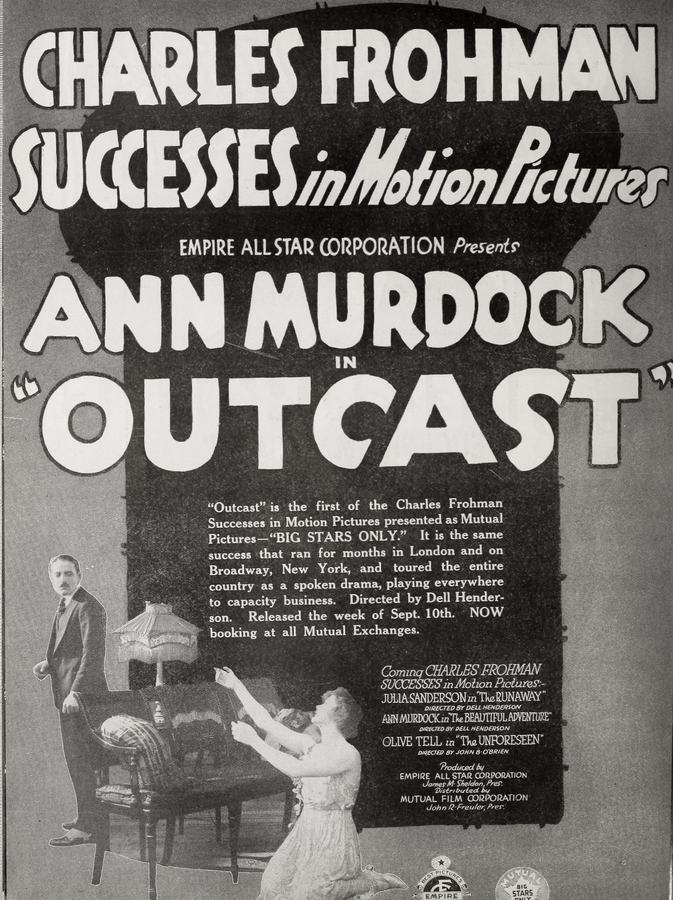
Director's Spotlight: United States
A Deep Dive into the 1917 Vision of Dell Henderson
Deciphering the layers of Outcast (1917) reveals the complex thematic architecture established by Dell Henderson. Utilizing a 1917-specific aesthetic that remains timeless, it stands as the definitive 1917 statement on cult identity.
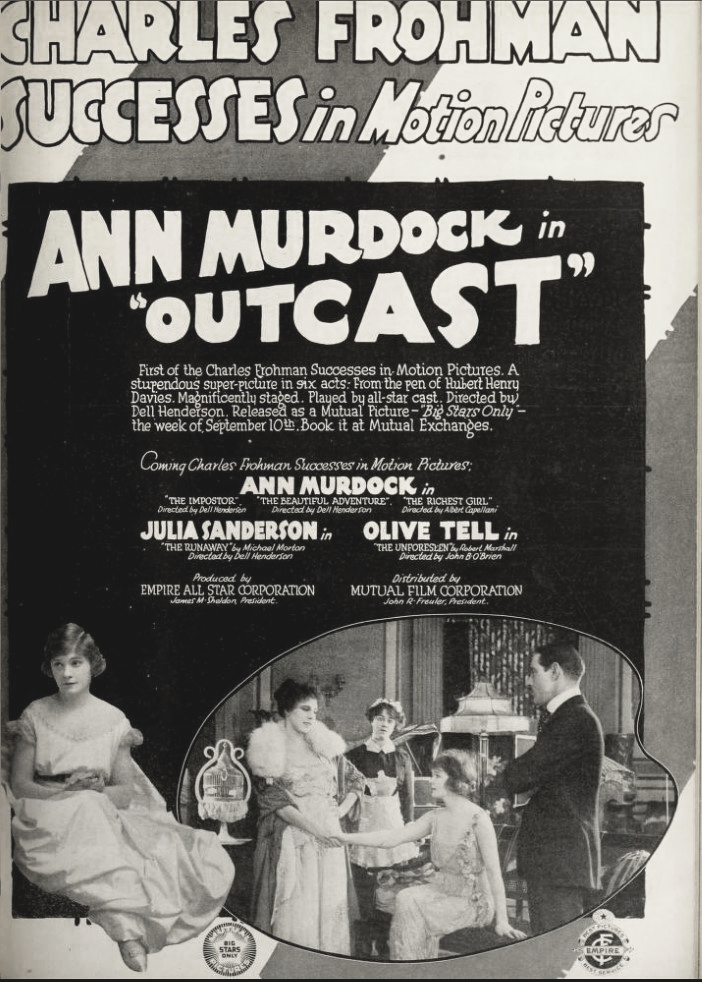
In Outcast, Dell Henderson pushes the boundaries of conventional narrative. The film's unique approach to its subject matter has sparked endless debates and interpretations among cinephiles and critics alike.
| Cinematography | High-Contrast |
| Soundtrack | Minimalist |
| Editing | Slow-Burn |
| Art Direction | Brutalist |
Visualizing the convergence of Dell Henderson's style and the core cult narrative.
After Miriam Gibson is seduced and abandoned by a handsome adventurer, who marries an old woman with money, she becomes a prostitute to get money for her new-born child. When the baby dies, Miriam, now without hopes, goes to London and becomes the mistress and housekeeper of barrister Geoffrey Sherwood, who has become a drunkard after having been jilted by his fiancée Valentine, when she married a wealthy baronet. Miriam hopes to marry Geoffrey, but when Valentine, who is unhappy with her baronet, begins to trifle with Geoffrey, he responds and discards Miriam. Geoffrey soon realizes the shallowness of his affair with Valentine, who has not divorced the baronet, and his sense of shame is awakened by Miriam's kindness and consideration for others. They marry in a little Scottish kirk, and sail for Buenos Aires to begin a new life.
Decades after its release, Outcast remains a vital piece of the cinematic puzzle. Its influence can be seen in countless modern works, solidifying Dell Henderson's status as a master of the craft in United States and beyond.