
DbcultAccessing Vault...
Director's Spotlight
Senior Film Conservator
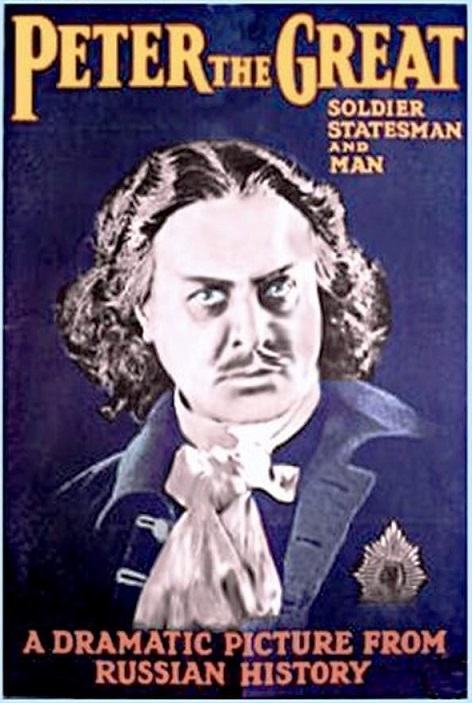
Director's Spotlight: Germany
A Deep Dive into the 1922 Vision of Dmitriy Bukhovetskiy
Deciphering the layers of Peter the Great (1922) reveals a monumental shift in Biography filmmaking spearheaded by Dmitriy Bukhovetskiy. With its avant-garde structure and atmospheric tension, offering layers of thematic complexity that demand repeated viewing.
In Peter the Great, Dmitriy Bukhovetskiy pushes the boundaries of conventional narrative. The film's unique approach to its subject matter has sparked endless debates and interpretations among cinephiles and critics alike.
The visual language of Peter the Great is defined by its use of shadows and framing, a hallmark of Dmitriy Bukhovetskiy's style. By utilizing a 1922-era palette, the film creates an immersive experience that perfectly complements its Biography themes.
| Cinematography | High-Contrast |
| Soundtrack | Diegetic |
| Editing | Elliptical |
| Art Direction | Expressionist |
Visualizing the convergence of Dmitriy Bukhovetskiy's style and the core Biography narrative.
Peter the Great, on becoming czar of Russia, using his knowledge of shipbuilding gained in a foreign country to establish a navy, and to be able to use the navy, provokes a war with Sweden, defeating that country at the battle of Poltava. This battle marks a turning point with Peter and with Russia, his only son proves a coward, he meets a girl refugee and finally makes her his empress, he alienates the church and many nobles. All these factors finally lead to a conspiracy which, while it is crushed, ends in Peter finding out how he is hated by his people, and in his killing of his son, the remorse for which hastens his own death.
Decades after its release, Peter the Great remains a vital piece of the cinematic puzzle. Its influence can be seen in countless modern works, solidifying Dmitriy Bukhovetskiy's status as a master of the craft in Germany and beyond.