
DbcultAccessing Vault...
Director's Spotlight
Senior Film Conservator
Director's Spotlight: United States
A Deep Dive into the 1917 Vision of Donald Crisp
As we revisit the 1917 masterpiece His Sweetheart, we are struck by the atmospheric immersion that Donald Crisp achieves throughout His Sweetheart. Exploring the nuances of the human condition with cult flair, it solidifies Donald Crisp's reputation as a master of the craft.
In His Sweetheart, Donald Crisp pushes the boundaries of conventional narrative. The film's unique approach to its subject matter has sparked endless debates and interpretations among cinephiles and critics alike.
While deeply rooted in United States, His Sweetheart has achieved a global reach, influencing directors from various backgrounds. Its ability to translate cult tropes into a universal cinematic language is why it remains a cult staple decades after its 1917 release.
| Cinematography | Noir-Inspired |
| Soundtrack | Synth-Heavy |
| Editing | Disjunctive |
| Art Direction | Baroque |
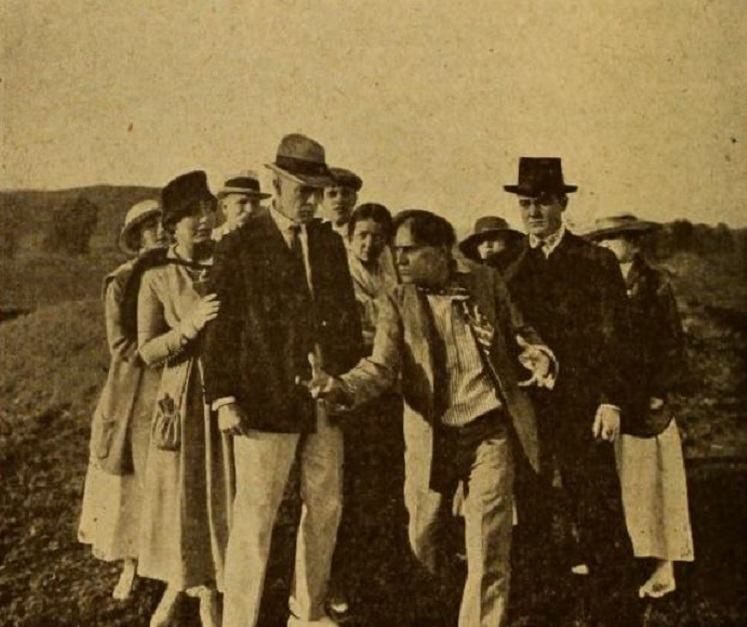
Visualizing the convergence of Donald Crisp's style and the core cult narrative.
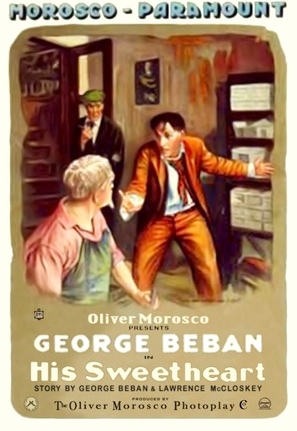
Joe, a good natured Italian, runs a basement ice, coal, and wood establishment in the cheap Italian "East Side." Trina, daughter of old Capino, a cobbler, lives next door. She is fond of Joe and is relieved when she learns that Joe's "sweetheart," who arrives from Italy, is none other than his little old "Mama Mia," his mother. Godfrey Kelland, district attorney, is a candidate for the governorship, and Joe's sympathies and efforts are enlisted in his behalf. The Weasel, a notorious crook, is arrested as he seeks refuge in Joe's house, and suspicions are cast upon Mama Mia. Just at this time Mrs. Kelland loses a diamond pin which is discovered in Mama Mia's possession. Baby Kelland has placed the pin in the basket of clothes which Mama Mia is to wash and she is found "guilty" and sentenced to two years in the penitentiary. In the meantime, Joe and his mother have witnessed an attempt upon Kelland's life and assisted him, but nevertheless Kelland is vigorous in his prosecution of Mama Mia. A little later Mrs. Kelland discovers the baby putting another piece of jewelry in the basket and she decides that Joe's mother is innocent. Two crooks from the gang determine to put a stop to Kelland's activities and to "plant" a golf ball filled with nitroglycerin so that Kelland will be blown up as by an unknown accident. They play upon Joe's feelings and induce him to place the ball. Just as Kelland is about to strike the ball, Mrs. Kelland and Trina come into the grounds, and to save them Joe takes the blow upon his own body. Joe's confession that the ball was intended for him incites Kelland's anger, but Mrs. Kelland's story of the baby's innocent part in the tragedy, and her pleadings, soften the politician's heart, the little Italian family is reunited, and Trina's happiness also secured.
Decades after its release, His Sweetheart remains a vital piece of the cinematic puzzle. Its influence can be seen in countless modern works, solidifying Donald Crisp's status as a master of the craft in United States and beyond.