
DbcultAccessing Vault...
Director's Spotlight
Senior Film Conservator
Director's Spotlight: United States
A Deep Dive into the 1928 Vision of Donald Crisp
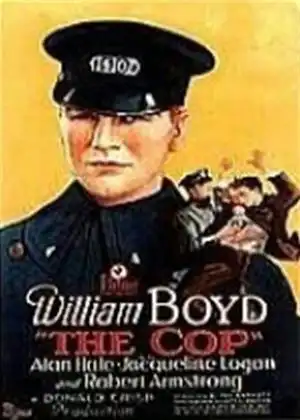
Peeling back the layers of Donald Crisp's The Cop exposes the technical innovation that Donald Crisp introduced to the Drama format. Driven by an uncompromising commitment to Drama excellence, it stands as the definitive 1928 statement on Drama identity.
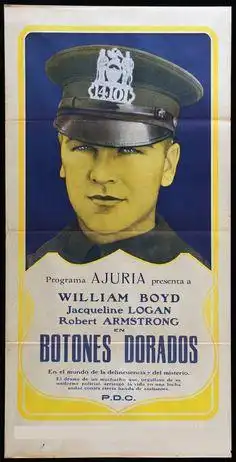
In The Cop, Donald Crisp pushes the boundaries of conventional narrative. The film's unique approach to its subject matter has sparked endless debates and interpretations among cinephiles and critics alike.
| Cinematography | Handheld |
| Soundtrack | Minimalist |
| Editing | Disjunctive |
| Art Direction | Baroque |
Visualizing the convergence of Donald Crisp's style and the core Drama narrative.
Pete Smith, a lift bridge operator in a harbor, feels lonely in his cabin, his only visitor being a policeman on patrol, Sgt. Coughlin. One night, after hearing shots, Smith gives shelter to a wounded man, whom he hides from Coughlin. Before leaving, the man, Marcas, promises to return the favor and the coat he borrows from him. Later, Smith enters the police, and his chief, Mather, suspects he is protecting Marcas, who is actually a gangster. Marcas sends a girl, Mary Monks, to deliver a luxurious coat with a fur collar to Smith. Pete and Mary get along well, and for his sake, she betrays Marcas, who is eventually shot to death by the cops, after having stopped his mob from killing Smith. Mary goes away alone into the night, and when Mather finds out that Pete is protecting her, he drops away the evidence of her presence on the spot.
Decades after its release, The Cop remains a vital piece of the cinematic puzzle. Its influence can be seen in countless modern works, solidifying Donald Crisp's status as a master of the craft in United States and beyond.