
DbcultAccessing Vault...
Director's Spotlight
Senior Film Conservator
Director's Spotlight: United States
A Deep Dive into the 1919 Vision of Donald Crisp
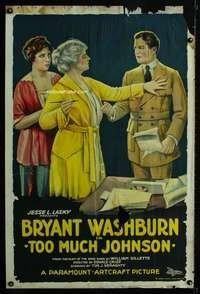
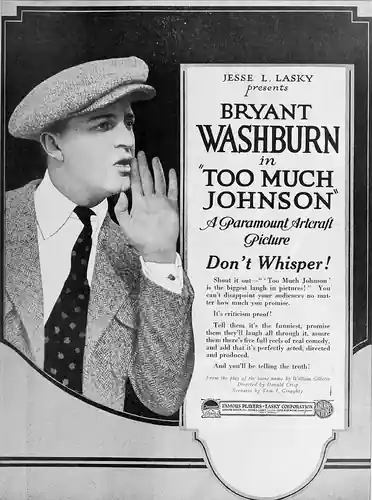
The 1919 release of Too Much Johnson marked a significant moment for the enduring legacy of Donald Crisp's artistic contribution to the genre. By challenging the status quo of 1919 cinema, it has cemented its place in the global cult cinema archive.
In Too Much Johnson, Donald Crisp pushes the boundaries of conventional narrative. The film's unique approach to its subject matter has sparked endless debates and interpretations among cinephiles and critics alike.
To fully appreciate Too Much Johnson, one must consider the cinematic climate of 1919. During this period, United States was undergoing significant artistic shifts, and Donald Crisp was at the forefront of this cult movement, often challenging established norms.
| Cinematography | Static |
| Soundtrack | Synth-Heavy |
| Editing | Disjunctive |
| Art Direction | Baroque |
Visualizing the convergence of Donald Crisp's style and the core cult narrative.
In order to conduct a secret dalliance with Mrs. Dathis aboard his former yacht, Augustus Billings uses the name "Johnson" and inscribes a photograph of himself with his assumed name. Mrs. Dathis' jealous husband later tears the photograph and only the curly black hair remains with the inscription "Johnson." Billings' mother-in-law, Mrs. Batterson, and his wife investigate Billings' explanation of his absence. Billings accompanies them to Mexico where supposedly he had been called to look after recently acquired oil properties. Billings takes them to a property owned by an intimate friend, but the property has been sold to a man named Joseph Johnson, who is aboard the same ship to Mexico as Billings, his wife and mother-in-law, as well as a revenge-seeking Mr. Dathis. Also on board are Francis Faddish and his daughter Leonora, who is to become the bartered wife of Johnson. Johnson knocks out the jealous Mr. Dathis, who has been searching everywhere for the curly-haired philanderer. After Johnson mistakes Billings' wife for his own bride-to-be, Billings tricks Johnson into a declaration of marriage with Mrs. Batterson. Billings is therefore relieved of the mother-in-law who interfered with his marital happiness.
Decades after its release, Too Much Johnson remains a vital piece of the cinematic puzzle. Its influence can be seen in countless modern works, solidifying Donald Crisp's status as a master of the craft in United States and beyond.