
DbcultAccessing Vault...
Director's Spotlight
Senior Film Conservator
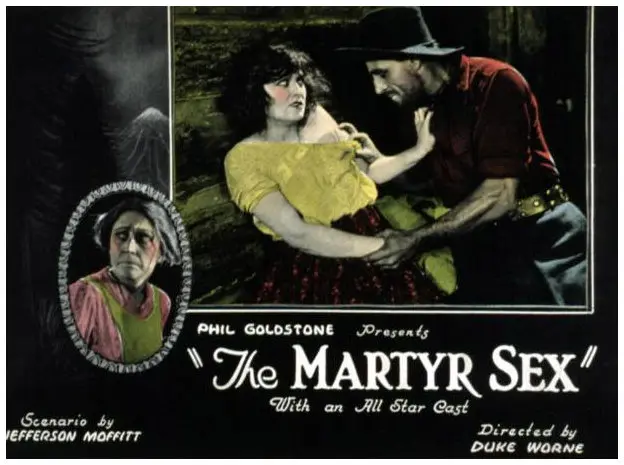
Director's Spotlight: United States
A Deep Dive into the 1924 Vision of Duke Worne
As a cultural artifact of the 1924s, The Martyr Sex provides the global recognition that Duke Worne garnered after the release of The Martyr Sex. Elevating the source material through Duke Worne's unique vision, it solidifies Duke Worne's reputation as a master of the craft.
In The Martyr Sex, Duke Worne pushes the boundaries of conventional narrative. The film's unique approach to its subject matter has sparked endless debates and interpretations among cinephiles and critics alike.
| Cinematography | High-Contrast |
| Soundtrack | Experimental |
| Editing | Elliptical |
| Art Direction | Expressionist |
Visualizing the convergence of Duke Worne's style and the core cult narrative.
Summoned to a cabin in the southern woods, Dr. Ross Wayne treats Branch Paxton, wounded in a feud, by amputating an arm. At the same time he warns Paxton that his daughter, Beulah, who has been mistreated, must be given rest and quiet. Paxton recovers and swears vengeance on Wayne, believing that the doctor amputated out of malice. Paxton, his son Lem, and a renegade friend named Ed Carter decide to kill Wayne when he makes a house call. Wayne escapes with Beulah, now weak and dying, to a shack in the woods. The three men follow in pursuit. Wayne tricks Lem into entering the cabin and forcibly transfers blood from him to Beulah, thus saving her life. The situation is resolved, and all ends happily.
Decades after its release, The Martyr Sex remains a vital piece of the cinematic puzzle. Its influence can be seen in countless modern works, solidifying Duke Worne's status as a master of the craft in United States and beyond.