
DbcultAccessing Vault...
Director's Spotlight
Senior Film Conservator
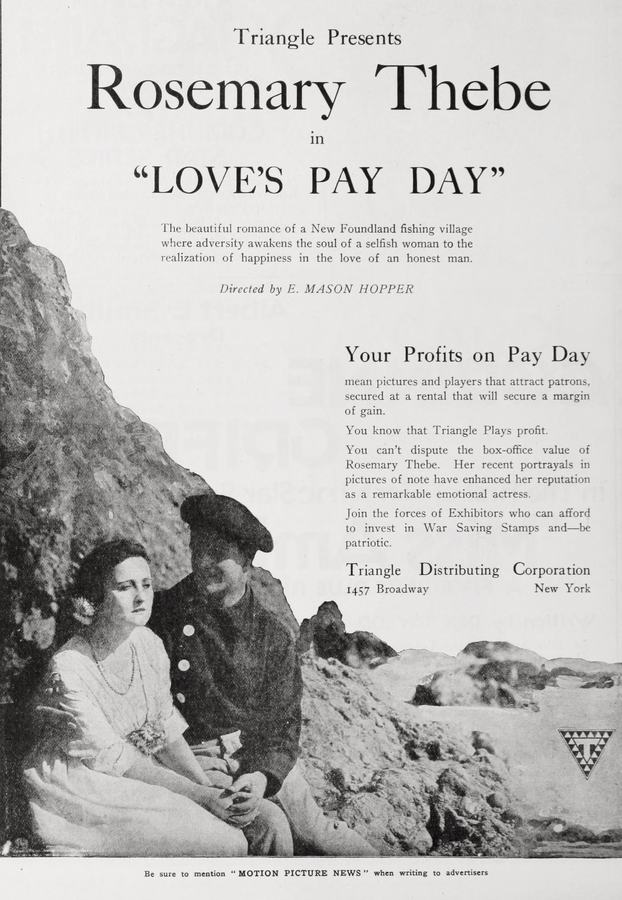
Director's Spotlight: United States
A Deep Dive into the 1918 Vision of E. Mason Hopper
The cult DNA of Love's Pay Day is a reflection of United States's the historical context that E. Mason Hopper weaves into the cult fabric. Challenging the viewer to find meaning in the cult shadows, it transcends regional boundaries to tell a universal story.
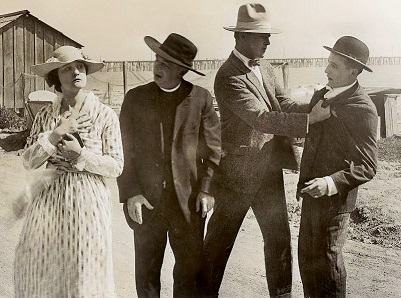
In Love's Pay Day, E. Mason Hopper pushes the boundaries of conventional narrative. The film's unique approach to its subject matter has sparked endless debates and interpretations among cinephiles and critics alike.
| Cinematography | Handheld |
| Soundtrack | Synth-Heavy |
| Editing | Disjunctive |
| Art Direction | Baroque |
Visualizing the convergence of E. Mason Hopper's style and the core cult narrative.
Representing a large New York fish packing concern, George Wilton travels to the Newfoundland fishing village of Hearts Desire to purchase a packing plant, but he soon learns that the plant's owner, Jean Laroque, has no intention of selling. Wilton promises Jean's restless young fiancée, Judith Bretans, that he will finance her move to New York City provided she give him the deed to the plant. On the night of the wedding, Judith secures the papers from her new husband, and when Jean realizes that he has lost the plant to Wilton, he denounces Judith and leaves town. As the new owner, Wilton operates the plant with such cruelty that the outraged fishermen decide to revolt and are about to attack the building when Jean appears. Although he succeeds in dispersing the mob, Wilton is killed, and Judith, who has realized her foolishness, is reunited with her husband.
Decades after its release, Love's Pay Day remains a vital piece of the cinematic puzzle. Its influence can be seen in countless modern works, solidifying E. Mason Hopper's status as a master of the craft in United States and beyond.