
DbcultAccessing Vault...
Director's Spotlight
Senior Film Conservator
Director's Spotlight: United States
A Deep Dive into the 1927 Vision of E. Mason Hopper
In the storied career of E. Mason Hopper, My Friend from India stands as a the provocative questions that E. Mason Hopper poses to the United States audience. Elevating the source material through E. Mason Hopper's unique vision, it persists as a haunting reminder of our own cinematic history.
In My Friend from India, E. Mason Hopper pushes the boundaries of conventional narrative. The film's unique approach to its subject matter has sparked endless debates and interpretations among cinephiles and critics alike.
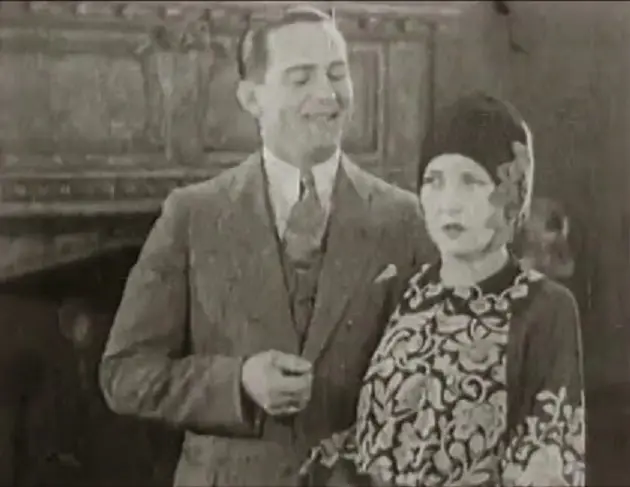
The visual language of My Friend from India is defined by its use of shadows and framing, a hallmark of E. Mason Hopper's style. By utilizing a 1927-era palette, the film creates an immersive experience that perfectly complements its Comedy themes.
| Cinematography | High-Contrast |
| Soundtrack | Minimalist |
| Editing | Disjunctive |
| Art Direction | Baroque |
Visualizing the convergence of E. Mason Hopper's style and the core Comedy narrative.
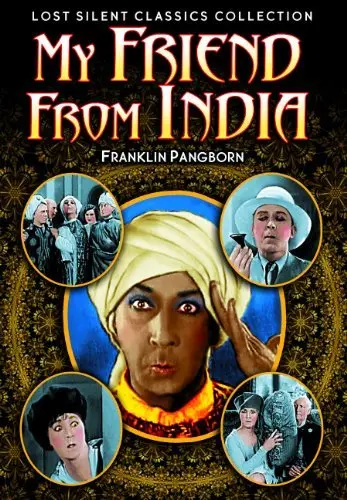
Wealthy young man about town, Tommy Valentine (Franklin Pangborn) comes to the aid of Barbara Smith (Elinor Fair). But before he can learn anything about Barbara, her social climbing Aunt Bedelia (Ethel Wales), whisks her away. On a mission to 'find the girl,' Tommy looks for her everywhere. He unknowingly befriends her brother Charlie, who invites him to spend the evening in Smith's palatial home. The next morn Aunt Bedelia finds Tommy with his head wrapped in a towel and assumes him to be the Hindu prince that Charlie promised to bring to her society party. Introduced to all as a Prince from Calcutta, Tommy is forced to see the charade through. But the local con man Charlie had previously arranged to appear at the party as the Prince shows up as well. At least Tommy is able to reconnect with Barbara, that is until the police show up with orders to arrest all fake fakirs.
Decades after its release, My Friend from India remains a vital piece of the cinematic puzzle. Its influence can be seen in countless modern works, solidifying E. Mason Hopper's status as a master of the craft in United States and beyond.