
DbcultAccessing Vault...
Director's Spotlight
Senior Film Conservator
Director's Spotlight: United States
A Deep Dive into the 1915 Vision of Earle Emlay
Analyzing The Pageant of San Francisco (1915) requires a deep dive into the defining moment in cult history that Earle Emlay helped create. Defining a new era of United States artistic expression, it transcends regional boundaries to tell a universal story.
In The Pageant of San Francisco, Earle Emlay pushes the boundaries of conventional narrative. The film's unique approach to its subject matter has sparked endless debates and interpretations among cinephiles and critics alike.
In this work, Earle Emlay explores the intersection of cult and United States cultural identity. The meticulous attention to detail suggests a deep-seated commitment to pushing the boundaries of the medium, ensuring that The Pageant of San Francisco remains a relevant topic of study for cult enthusiasts.
| Cinematography | Noir-Inspired |
| Soundtrack | Orchestral |
| Editing | Slow-Burn |
| Art Direction | Brutalist |
Visualizing the convergence of Earle Emlay's style and the core cult narrative.
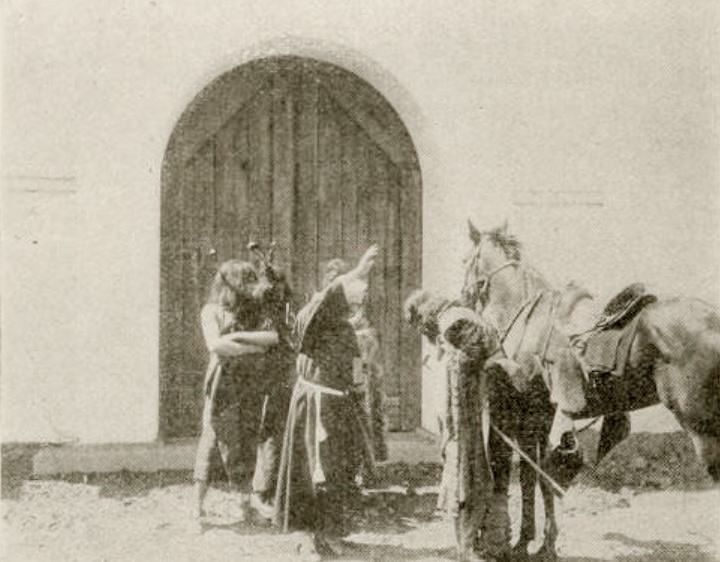
Portola and his band of adventurers departed from the Spanish settlement of San Diego, California, and traveled northward through the unexplored regions until they beheld the beautiful expanse of water which is now known as the San Francisco Bay. Hurrying back to San Diego, Portola reported the result of his expedition to the Royal Viceroy. The Viceroy decided to plant a Spanish colony and dispatched a column of settlers under the command of Juan Batista Anza, and Padre Junipero Serra, a monk, to the newly-found country. After a hazardous journey the colonists arrived, and the pious monk, raising the banners of the church and of Spain aloft, invoked the blessing of the Almighty upon the settlement named in honor of St. Francis. A hundred years passed over the little town before the first Yankee arrived from the distant United States, a thousand miles to the eastward. In him was the spirit of California's future greatness, for, from that moment, dates the periods of great expansion and prosperity which has made California one of the greatest States in the Union. Shortly after this the Mexican war was fought, and California became a territory of the United States. In 1849 gold was accidentally discovered near the then-village of San Francisco. From all parts of the world throngs of adventurers flocked to California. So great was the development that before another year had passed California was admitted as a full-fledged member into the Sisterhood of States. The next decade saw the rapidly-growing city in the clutches of a ring of lawless politicians. We next see the fair city of St. Francis almost leveled to the ground as the result of the great earthquake. Vast stretches that had been reduced to charred ruins are shown upon the screen. In the rebuilding of the almost-destroyed city we see the indomitable American spirit that has made the United States one of the leaders among nations assert itself. Undaunted by disaster, faithful to its ideals the newer and greater city of St. Francis arises from the smoldering ashes of her former self. A beautiful panoramic view showing the entire great Panama-Pacific Exposition, with the hills of the Golden Gate sloping to the sea, brings the spectacle to a fitting conclusion.
Decades after its release, The Pageant of San Francisco remains a vital piece of the cinematic puzzle. Its influence can be seen in countless modern works, solidifying Earle Emlay's status as a master of the craft in United States and beyond.