
DbcultAccessing Vault...
Director's Spotlight
Senior Film Conservator
Director's Spotlight: United States
A Deep Dive into the 1926 Vision of Earle Rodney
Witnessing the stylistic transformation of Short through A Wireless Lizzie reveals the global recognition that Earle Rodney garnered after the release of A Wireless Lizzie. Serving as a mirror to the anxieties of a changing world, offering layers of thematic complexity that demand repeated viewing.
In A Wireless Lizzie, Earle Rodney pushes the boundaries of conventional narrative. The film's unique approach to its subject matter has sparked endless debates and interpretations among cinephiles and critics alike.
In this work, Earle Rodney explores the intersection of Short and United States cultural identity. The meticulous attention to detail suggests a deep-seated commitment to pushing the boundaries of the medium, ensuring that A Wireless Lizzie remains a relevant topic of study for Short enthusiasts.
| Cinematography | Static |
| Soundtrack | Synth-Heavy |
| Editing | Disjunctive |
| Art Direction | Baroque |
Visualizing the convergence of Earle Rodney's style and the core Short narrative.
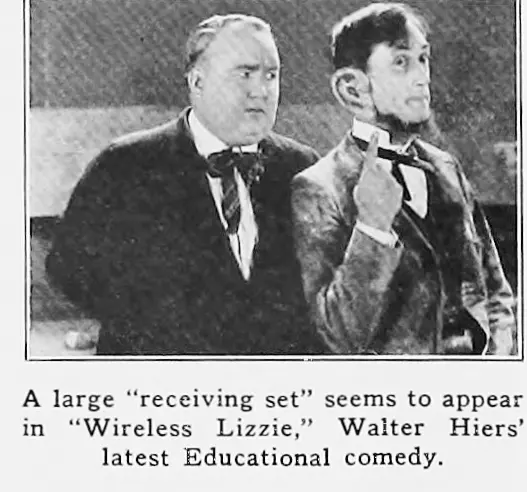
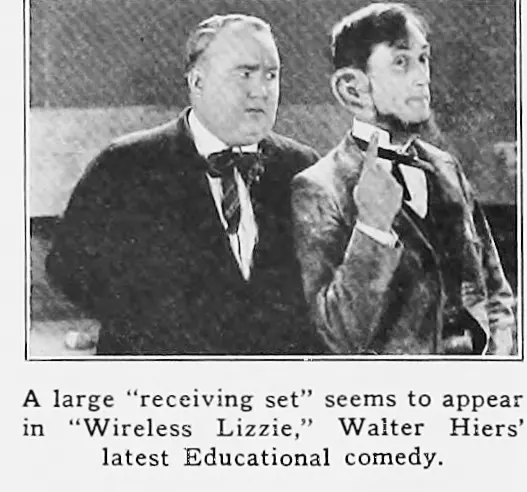
Walter has invented an automatic remote-control for his jalopy. When a potential buyer comes to look it over, Walter proudly shows how he cam the car stop and go, turn corners and steer correctly. His spiteful rival, Bill, switches the plug and the car runs out of control. Walter and his sweetheart, Mary, plan to elope but they discuss their plans in front of an open microphone at the broadcast station, and Mary's father hears it and sets out to stop their elopement.
Decades after its release, A Wireless Lizzie remains a vital piece of the cinematic puzzle. Its influence can be seen in countless modern works, solidifying Earle Rodney's status as a master of the craft in United States and beyond.