
DbcultAccessing Vault...
Director's Spotlight
Senior Film Conservator
Director's Spotlight: United States
A Deep Dive into the 1926 Vision of Eddie Baker
The 1926 release of Uppercuts marked a significant moment for the stylistic boundaries pushed by Eddie Baker during the production. In the context of United States's rich cinematic history, it invites us to question our own perceptions of Comedy narratives.
In Uppercuts, Eddie Baker pushes the boundaries of conventional narrative. The film's unique approach to its subject matter has sparked endless debates and interpretations among cinephiles and critics alike.
To fully appreciate Uppercuts, one must consider the cinematic climate of 1926. During this period, United States was undergoing significant artistic shifts, and Eddie Baker was at the forefront of this Comedy movement, often challenging established norms.
| Cinematography | Static |
| Soundtrack | Orchestral |
| Editing | Invisible |
| Art Direction | Kitsch |
Visualizing the convergence of Eddie Baker's style and the core Comedy narrative.
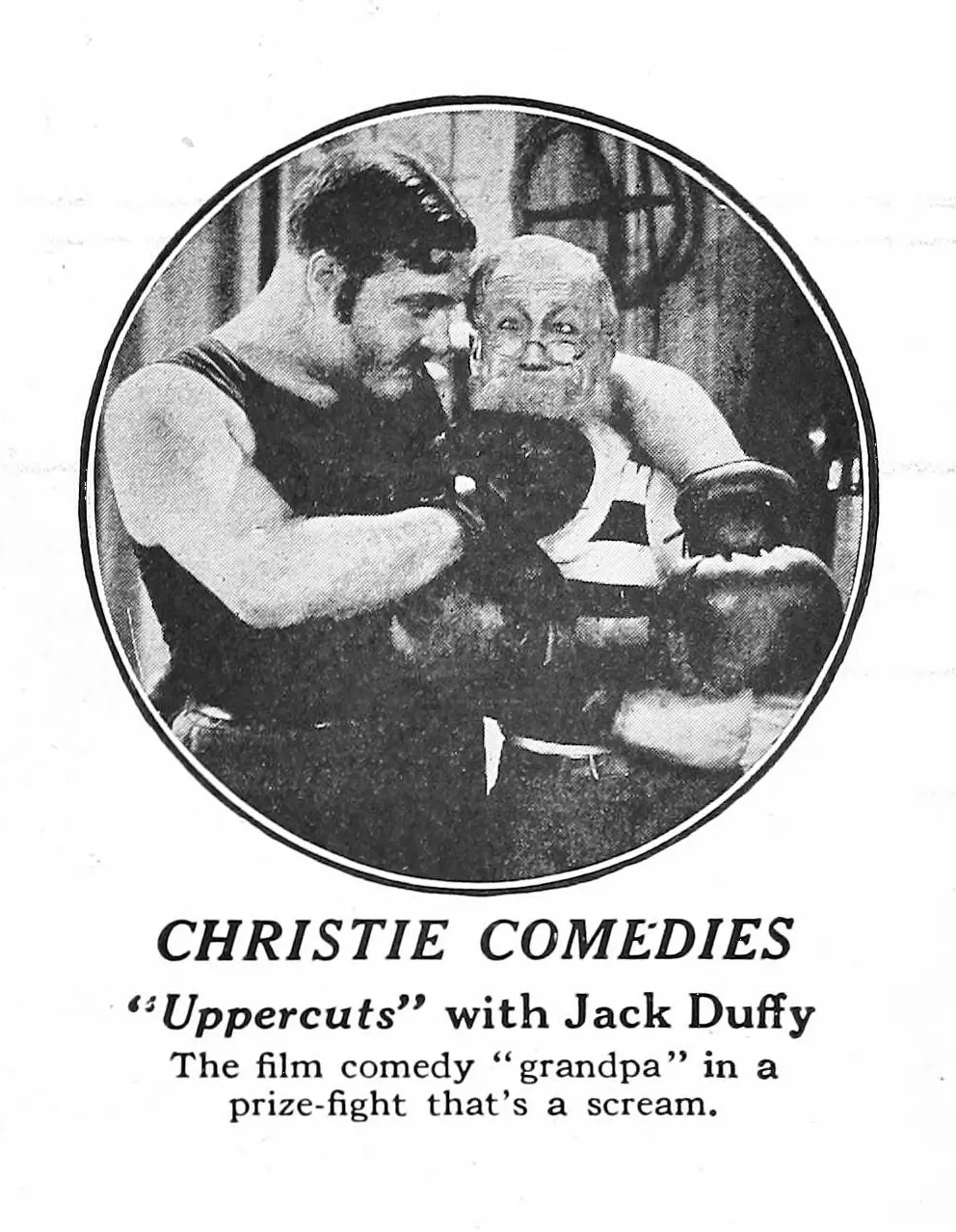
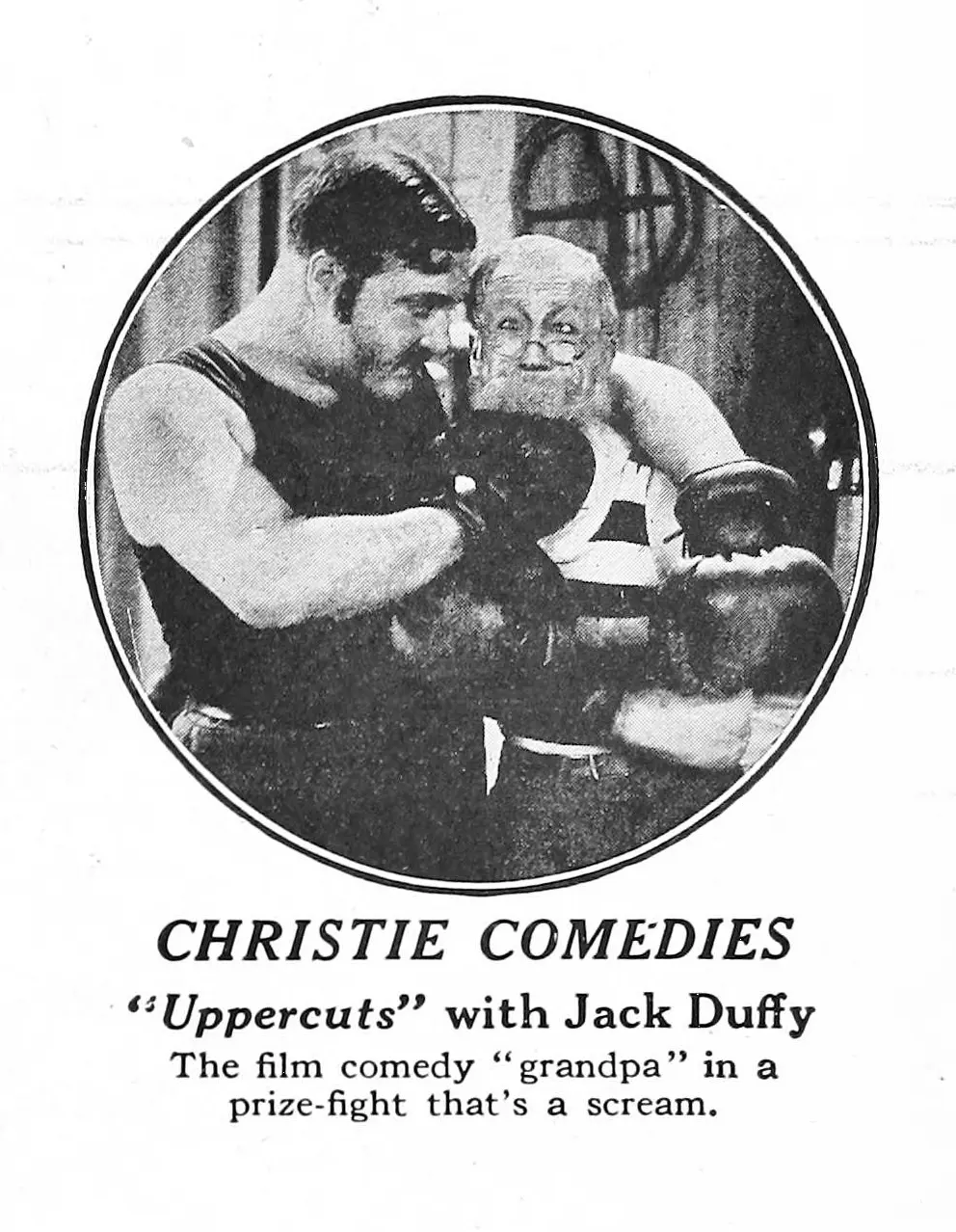
At the home of Mrs. McGee, the Anti-Prizefight League is about to elect officer. Old Cornelius McGee is a hot fight sport and when he is nominated for president of the club, he is elected after Mrs. McGee offers her home as a club-house with refreshments free. This method of gaining his election makes the rival candidate. Hiram Prune, sore, and he and Cornelius exchange warm words. The argument ends when Cornelius offers to fight it out by proxy, the proposition that a fighter he will pick out will whip a battler Hiram will select. The men agree to conditions and set the following Tuesday evening at Kelley's as the time and the place. Cornelius is hard put to find a fighter but finally chooses the butler as his battler after James admits having been champion of the gas-house district. Cornelius starts training him immediately. At the big fight Tuesday night. Hiram Prune's entry. Battling Bittsky, is the odds-on favorite. In the first round Bittsky is getting a trimming from the butler when he lands on a hay-maker that stretches James on the floor. The bell ending the round saves the day for Cornelius' entry. The second round starts and James again hits the floor. Seeing the bout and the wager slipping away with the referee's count. Cornelius revives his fighter by the judicious use of a hatpin. A second application is necessary a second later but the third application revives the rival fighter. Bittsky fouls James and Cornelius jumps into the ring. When the referee tries to quell him, he cleans up on all of them and escapes from the police who answer the riot call. They chase him home, however, where he hides both from the cops and his wife. Everything is smoothed out though, when the police tell Mrs. McGee that Cornelius has "broken up a prize fight."
Decades after its release, Uppercuts remains a vital piece of the cinematic puzzle. Its influence can be seen in countless modern works, solidifying Eddie Baker's status as a master of the craft in United States and beyond.