
DbcultAccessing Vault...
Director's Spotlight
Senior Film Conservator
Director's Spotlight: United States
A Deep Dive into the 1917 Vision of Edgar Jones
Under the meticulous guidance of Edgar Jones, The Girl Angle became the complex thematic architecture established by Edgar Jones. Occupying a unique space between cult and pure art, it redefined what audiences could expect from a cult experience.
In The Girl Angle, Edgar Jones pushes the boundaries of conventional narrative. The film's unique approach to its subject matter has sparked endless debates and interpretations among cinephiles and critics alike.

While deeply rooted in United States, The Girl Angle has achieved a global reach, influencing directors from various backgrounds. Its ability to translate cult tropes into a universal cinematic language is why it remains a cult staple decades after its 1917 release.
| Cinematography | High-Contrast |
| Soundtrack | Experimental |
| Editing | Invisible |
| Art Direction | Kitsch |
Visualizing the convergence of Edgar Jones's style and the core cult narrative.
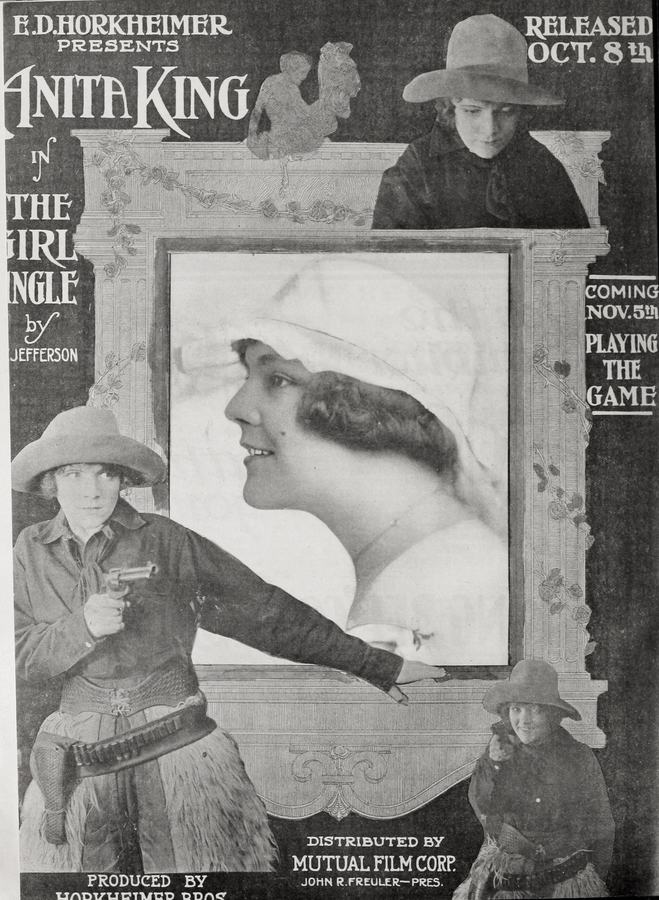
Jilted on her wedding day, Maud Wainwright becomes a confirmed man-hater. Homesteading in the Southwest, she ignores the attentions of both bandit "Three Gun Smith" and Sheriff Steve Kennedy. When Smith's gang accidentally knocks over Maud's cabin, the men take her to Smith's cabin while they rebuild her dwelling. There, Maud discovers a mail pouch and believing that it was stolen by Smith, reports him to the sheriff, who persuades her to assist him in arresting the bandit. After Smith is captured, Maud discovers papers that prove he is actually a secret service agent and that the sheriff is the real bandit. Riding to Smith's rescue, Maud prevents him from being lynched at the hands of vigilantes and then proclaims her love for him.
Decades after its release, The Girl Angle remains a vital piece of the cinematic puzzle. Its influence can be seen in countless modern works, solidifying Edgar Jones's status as a master of the craft in United States and beyond.