
DbcultAccessing Vault...
Director's Spotlight
Senior Film Conservator
Director's Spotlight: United States
A Deep Dive into the 1916 Vision of Edgar Lewis
The brilliance of The Bondman (1916) is inseparable from the visionary mind of its creator, Edgar Lewis. Serving as a mirror to the anxieties of a changing world, it persists as a haunting reminder of our own cinematic history.
In The Bondman, Edgar Lewis pushes the boundaries of conventional narrative. The film's unique approach to its subject matter has sparked endless debates and interpretations among cinephiles and critics alike.
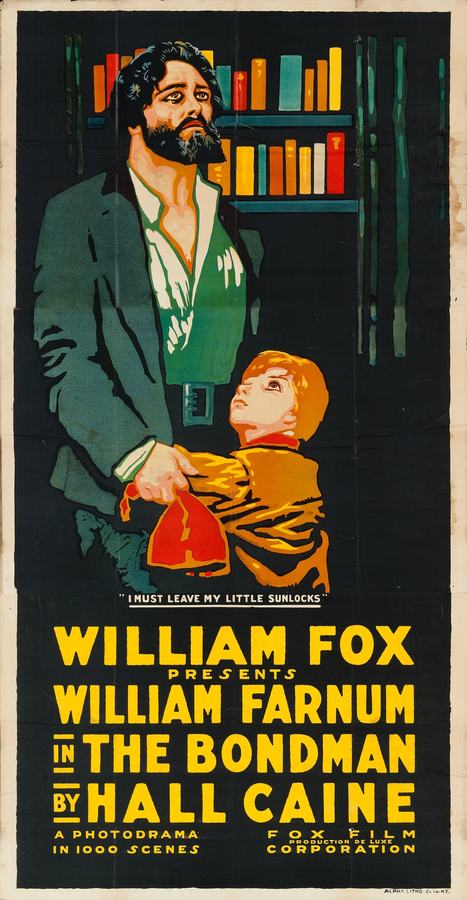
The visual language of The Bondman is defined by its use of shadows and framing, a hallmark of Edgar Lewis's style. By utilizing a 1916-era palette, the film creates an immersive experience that perfectly complements its cult themes.
| Cinematography | Static |
| Soundtrack | Orchestral |
| Editing | Slow-Burn |
| Art Direction | Brutalist |
Visualizing the convergence of Edgar Lewis's style and the core cult narrative.
Stephen Orry is an Icelandic vagabond. Rachel, the daughter of the governor of the province, is attracted to him. Her father, who is against the relationship, drives her from home, and she marries Orry. But she cannot make a man out of Orry, who runs off to sea. Rachel supports herself and her son Jason, while Orry begins a new life on the Isle of Man. He marries Liza Killey and they have a son named Sunlocks. When Liza mistreats Sunlocks, Orry takes him away to the governor of the Isle for safekeeping. After Rachel dies, Jason sets out for revenge against his father. His half-brother Sunlocks sets out for Iceland to find Rachel and Jason to make reparations, while Jason comes to the Isle of Man. While there, Jason saves his father from drowning, and after his father dies from a natural death, he turns his desire for revenge against Sunlocks. But when Sunlocks becomes a political prisoner, Jason forgoes his revenge and dies in place of Sunlocks.
Decades after its release, The Bondman remains a vital piece of the cinematic puzzle. Its influence can be seen in countless modern works, solidifying Edgar Lewis's status as a master of the craft in United States and beyond.