
DbcultAccessing Vault...
Director's Spotlight
Senior Film Conservator
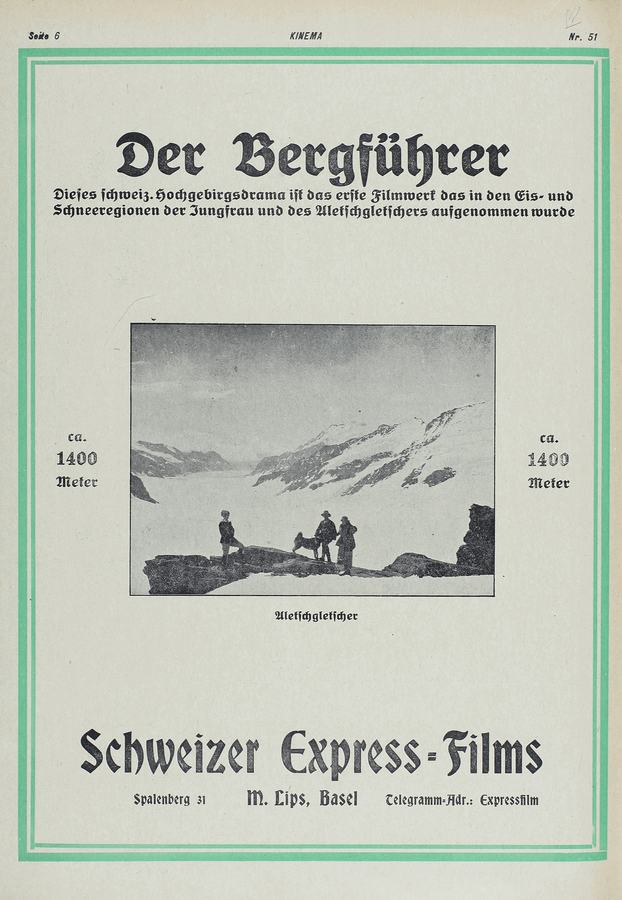
Director's Spotlight: Switzerland
A Deep Dive into the 1918 Vision of Eduard Bienz
Analyzing Der Bergführer (1918) requires a deep dive into the defining moment in cult history that Eduard Bienz helped create. Defining a new era of Switzerland artistic expression, it transcends regional boundaries to tell a universal story.
In Der Bergführer, Eduard Bienz pushes the boundaries of conventional narrative. The film's unique approach to its subject matter has sparked endless debates and interpretations among cinephiles and critics alike.
To fully appreciate Der Bergführer, one must consider the cinematic climate of 1918. During this period, Switzerland was undergoing significant artistic shifts, and Eduard Bienz was at the forefront of this cult movement, often challenging established norms.
| Cinematography | Deep Focus |
| Soundtrack | Experimental |
| Editing | Invisible |
| Art Direction | Kitsch |
Visualizing the convergence of Eduard Bienz's style and the core cult narrative.
The mountain guide Andreas loves Marie, the hotelier's daughter whom a guest from the city, Alfred, is courting. He thinks about getting rid of his rival, who doesn't suspect anything. Alfred even hires Andreas as a guide for an ascension to the Jungfraujoch. The weather worsens during their climb and Andreas decides to give up, but Alfred is still determined to reach the summit and perishes in the attempt. When Andreas returns to the village alone, Marie accuses him of being responsible for Alfred's death and he is sentenced to ten years of prison. Many years later, Alfred's body reappears from under the glacier and a revealing note is discovered.
Decades after its release, Der Bergführer remains a vital piece of the cinematic puzzle. Its influence can be seen in countless modern works, solidifying Eduard Bienz's status as a master of the craft in Switzerland and beyond.