Summary
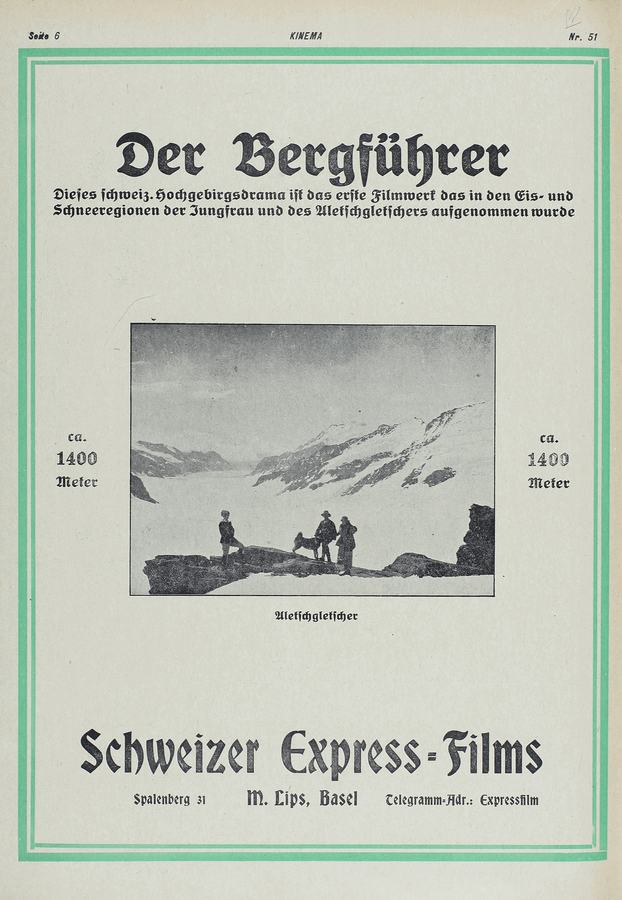
Set against the unforgiving, crystalline majesty of the Bernese Oberland, Der Bergführer (1918) functions as a precursor to the German Bergfilm, weaving a tapestry of atavistic jealousy and geological permanence. Andreas, a stoic guide whose identity is inextricably linked to the granite spires of the Jungfrau, finds his emotional equilibrium shattered by the arrival of Alfred, a sophisticated urbanite vying for the affections of Marie. The narrative tension escalates during a perilous ascent where the indifference of nature mirrors the internal turbulence of the protagonists. When Alfred’s hubris leads to his demise amidst a blinding blizzard, the silence of the peaks becomes a weapon used against Andreas. Accused of a calculated homicide by a grief-stricken Marie, the guide is cast into a decade-long purgatory of incarceration. The resolution is not found in human jurisprudence but in the slow, grinding movement of the Aletsch Glacier, which eventually surrenders the preserved remains of the rival, accompanied by a document that serves as a posthumous absolution from the ice itself.
Synopsis
The mountain guide Andreas loves Marie, the hotelier's daughter whom a guest from the city, Alfred, is courting. He thinks about getting rid of his rival, who doesn't suspect anything. Alfred even hires Andreas as a guide for an ascension to the Jungfraujoch. The weather worsens during their climb and Andreas decides to give up, but Alfred is still determined to reach the summit and perishes in the attempt. When Andreas returns to the village alone, Marie accuses him of being responsible for Alfred's death and he is sentenced to ten years of prison. Many years later, Alfred's body reappears from under the glacier and a revealing note is discovered.
Review Excerpt
"
The Verticality of Human Fragility
In the nascent years of European cinema, specifically within the neutral enclave of Switzerland during the tail end of the Great War, Der Bergführer (1918) emerged as a seminal text. Directed by and starring Eduard Bienz, this film is far more than a simple moralistic fable; it is a profound exploration of the conflict between the rugged, authentic existence of the mountain dweller and the perceived superficiality of the city-dweller. To wat..."