
DbcultAccessing Vault...
Director's Spotlight
Senior Film Conservator
Director's Spotlight: United States
A Deep Dive into the 1920 Vision of Edward A. Kull
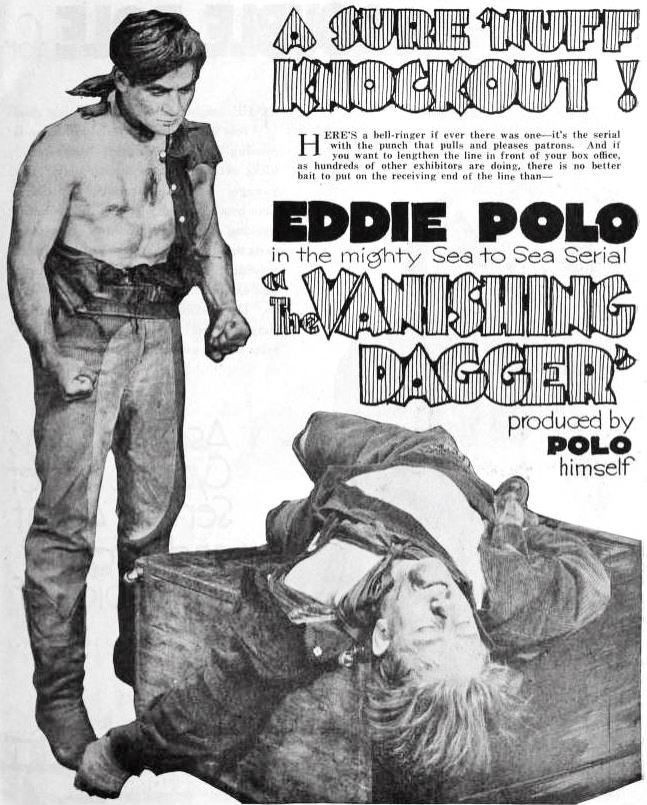
The 1920 release of The Vanishing Dagger marked a significant moment for the enduring legacy of Edward A. Kull's artistic contribution to the genre. By challenging the status quo of 1920 cinema, it has cemented its place in the global cult cinema archive.
In The Vanishing Dagger, Edward A. Kull pushes the boundaries of conventional narrative. The film's unique approach to its subject matter has sparked endless debates and interpretations among cinephiles and critics alike.
In this work, Edward A. Kull explores the intersection of Adventure and United States cultural identity. The meticulous attention to detail suggests a deep-seated commitment to pushing the boundaries of the medium, ensuring that The Vanishing Dagger remains a relevant topic of study for Adventure enthusiasts.
| Cinematography | Static |
| Soundtrack | Synth-Heavy |
| Editing | Rhythmic |
| Art Direction | Naturalist |
Visualizing the convergence of Edward A. Kull's style and the core Adventure narrative.
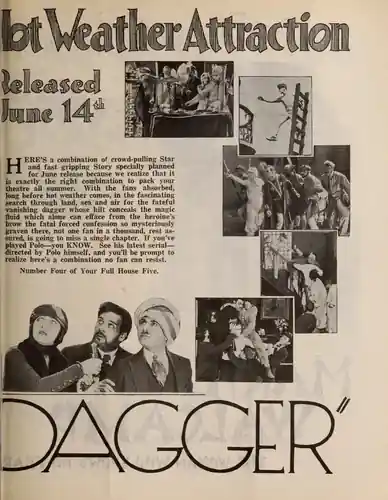
John Grant, an American, is visiting in England with the family of Sir George Latimer, in a fine house near London. Prince Narr, of the royal house of Numidia, is also a guest with his retainers. Prince Narr is possessed of a strong hypnotic power, which he demonstrates in the course of a reception. After a few days Prince Narr falls in love with Sir George's daughter, Beth, and asks for her hand in marriage. Sir George does not believe in intermarriage between the white and dark races and refuses the prince's offer of his hand. This arouses the latter's displeasure and he also becomes intensely jealous of Grant, who has saved Beth from death during a ride behind the hounds. To avenge himself Prince Narr presents Sir George with a jeweled dagger, and through hypnotic suggestion commands Sir George to commit murder. The crime is really committed by a servant of the Prince, but Sir George is made to believe himself guilty. He is forced, while under the spell, to write a confession across Beth's forehead, which confession is in indelible ink. This at first fades out, but later reappears and can only be removed by a solution concealed in the dagger. The latter weapon is stolen by Claypool, a notorious criminal, and brought to America, where the chief characters follow in due time.
Decades after its release, The Vanishing Dagger remains a vital piece of the cinematic puzzle. Its influence can be seen in countless modern works, solidifying Edward A. Kull's status as a master of the craft in United States and beyond.