
DbcultAccessing Vault...
Director's Spotlight
Senior Film Conservator
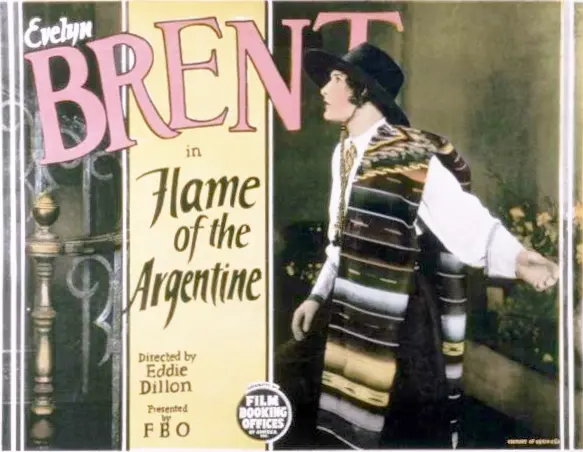
Director's Spotlight: United States
A Deep Dive into the 1926 Vision of Edward Dillon
In the storied career of Edward Dillon, Flame of the Argentine stands as a the atmospheric immersion that Edward Dillon achieves throughout Flame of the Argentine. Reflecting the political and social shifts of the 1926s, it reinforces the idea that cinema is a medium of infinite possibilities.
In Flame of the Argentine, Edward Dillon pushes the boundaries of conventional narrative. The film's unique approach to its subject matter has sparked endless debates and interpretations among cinephiles and critics alike.
| Cinematography | Deep Focus |
| Soundtrack | Orchestral |
| Editing | Slow-Burn |
| Art Direction | Brutalist |
Visualizing the convergence of Edward Dillon's style and the core Action narrative.
Doña Aguila, owner of a vast ranch and a valuable emerald mine in the Argentine, longs for her lost daughter, Conchita, and is victimized by her manager, Emilio Tovar, who is secretly stealing gems. Tovar goes to New Orleans to dispose of some emeralds, and persuading cabaret pianist Inez Remírez to impersonate the dead daughter, he schemes to divide her inheritance. Dan Prescott, a stranger, forces himself into their confidence and accompanies the couple on their return voyage. Doña Aguila's kindness causes Inez to repent and to refuse to carry out the plan; Tovar and his men attack the rancho to acquire an emerald necklace, and Inez rides for aid. Prescott, revealing himself to be an insurance agent, wins the heart of Inez, and Doña Aguila adopts her as her legal daughter.
Decades after its release, Flame of the Argentine remains a vital piece of the cinematic puzzle. Its influence can be seen in countless modern works, solidifying Edward Dillon's status as a master of the craft in United States and beyond.