
DbcultAccessing Vault...
Director's Spotlight
Senior Film Conservator
Director's Spotlight: United States
A Deep Dive into the 1916 Vision of Edward Dillon
As a cultural artifact of the 1916s, Sunshine Dad provides the visionary mind of its creator, Edward Dillon. With its avant-garde structure and atmospheric tension, it redefined what audiences could expect from a cult experience.
In Sunshine Dad, Edward Dillon pushes the boundaries of conventional narrative. The film's unique approach to its subject matter has sparked endless debates and interpretations among cinephiles and critics alike.
To fully appreciate Sunshine Dad, one must consider the cinematic climate of 1916. During this period, United States was undergoing significant artistic shifts, and Edward Dillon was at the forefront of this cult movement, often challenging established norms.
| Cinematography | Noir-Inspired |
| Soundtrack | Minimalist |
| Editing | Disjunctive |
| Art Direction | Baroque |
Visualizing the convergence of Edward Dillon's style and the core cult narrative.
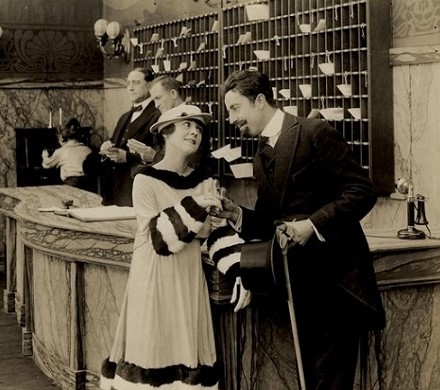
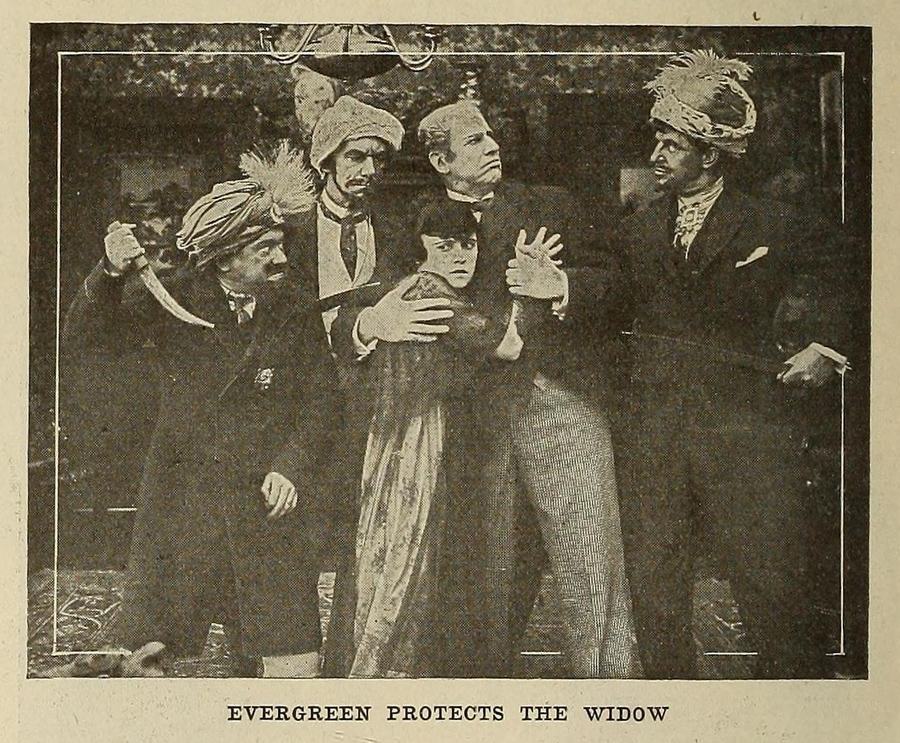
The theft of a sacred diamond band from a Hindu shrine starts the action. Count Kotschkoff, who has stolen the band, soon finds that the Mystic Seer and the Mystic Doer are hot on his trail. To thwart them, he asks the Widow Marrimore to keep the jewels for him. She wears the band as a garter, and at a dance it drops off and is picked up by Alonz Evergreen, a middle-aged actor who still aspires to be the juvenile. He does no work and lives on the daily touches he is able to obtain from his hardworking son. Evergreen, who believes that he's in love with the widow, reads an advertisement for the return of the jewels. He aims to increase his favor with the widow by sending back the band. He has wrapped it up in an affectionate note when his son's fiancée enters the office on her way home from a shopping tour. When she departs she takes all the bundles in sight. Alonzo discovers his loss and goes in mad pursuit. In her home the young woman has decided that her beloved is untrue, and has sent back the diamond band and her engagement ring. A distracted lover soon reaches the house to find his father engaged in a frantic attempt to verify his suspicion that the young woman is wearing a costly garter. The gems regained, Evergreen races to the hotel where the widow lives. The Mystic Seer and the Mystic Doer are on his track, but he eludes them and delivers the band. When the Seer and Doer break in and explain their errand the widow goes to the hiding place, but the jewels are gone. The Count has recovered them. The widow is taken to the shrine and tied, to a stake and threatened with death. The stake is near a cage in which a lion is confined. Slowly the gate is lifted and the lion is about to dart out when Alonzo arrives and releases his adored one. There is a thrilling chase and Leo, the lion, finally stalks the widow to a bath room. There Alonzo rescues her under the nose of the beast, the count is captured and the band recovered.
Decades after its release, Sunshine Dad remains a vital piece of the cinematic puzzle. Its influence can be seen in countless modern works, solidifying Edward Dillon's status as a master of the craft in United States and beyond.