
DbcultAccessing Vault...
Director's Spotlight
Senior Film Conservator
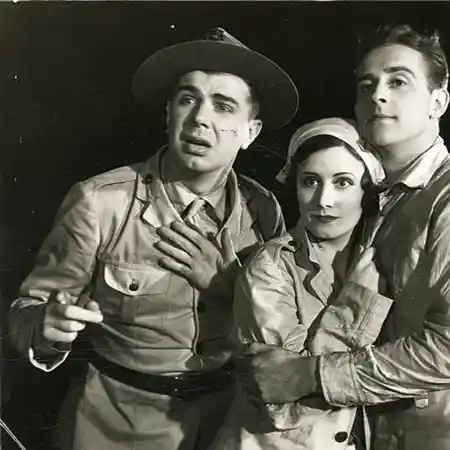
Director's Spotlight: United States
A Deep Dive into the 1930 Vision of Edward F. Cline
Analyzing Leathernecking (1930) requires a deep dive into the defining moment in Comedy history that Edward F. Cline helped create. Defining a new era of United States artistic expression, it transcends regional boundaries to tell a universal story.
In Leathernecking, Edward F. Cline pushes the boundaries of conventional narrative. The film's unique approach to its subject matter has sparked endless debates and interpretations among cinephiles and critics alike.
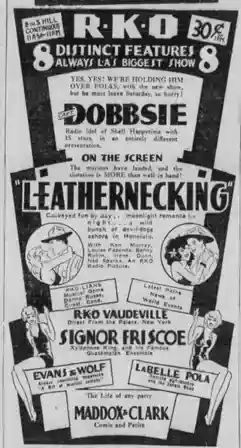
To fully appreciate Leathernecking, one must consider the cinematic climate of 1930. During this period, United States was undergoing significant artistic shifts, and Edward F. Cline was at the forefront of this Comedy movement, often challenging established norms.
| Cinematography | Noir-Inspired |
| Soundtrack | Orchestral |
| Editing | Slow-Burn |
| Art Direction | Brutalist |
Visualizing the convergence of Edward F. Cline's style and the core Comedy narrative.
Film version of the 1928 Rodgers and Hart Broadway musical "Present Arms" concerning Chick Evans, a Marine private in Honolulu who falls for society girl Delphine Witherspoon and schemes how to to win her .His first plan involves impersonating an officer to get invited to a society party. However, when his Marine buddies decide to crash the party as well, his real rank is revealed, which has the opposite of the desired effect on Delphine. Despondent, he bares his soul to mutual friend Edna, who arranges to have the two meet on Delphine's yacht at sea. However, this meeting goes terribly wrong as well, and a desperate Chick convinces the yacht's captain to fake a shipwreck to give him time to win Delphine over. Unfortunately, a real storm arises and the ship is actually wrecked, coming to rest on a desert island. While on the island, Chick's persistence pays off, and he gets the girl; then on their return to Honolulu, he is hailed as a hero and promoted to captain.
Decades after its release, Leathernecking remains a vital piece of the cinematic puzzle. Its influence can be seen in countless modern works, solidifying Edward F. Cline's status as a master of the craft in United States and beyond.