
DbcultAccessing Vault...
Director's Spotlight
Senior Film Conservator
Director's Spotlight: United States
A Deep Dive into the 1925 Vision of Edward LeSaint
In the storied career of Edward LeSaint, Speed stands as a the provocative questions that Edward LeSaint poses to the United States audience. Elevating the source material through Edward LeSaint's unique vision, it persists as a haunting reminder of our own cinematic history.
In Speed, Edward LeSaint pushes the boundaries of conventional narrative. The film's unique approach to its subject matter has sparked endless debates and interpretations among cinephiles and critics alike.
| Cinematography | Noir-Inspired |
| Soundtrack | Minimalist |
| Editing | Slow-Burn |
| Art Direction | Brutalist |
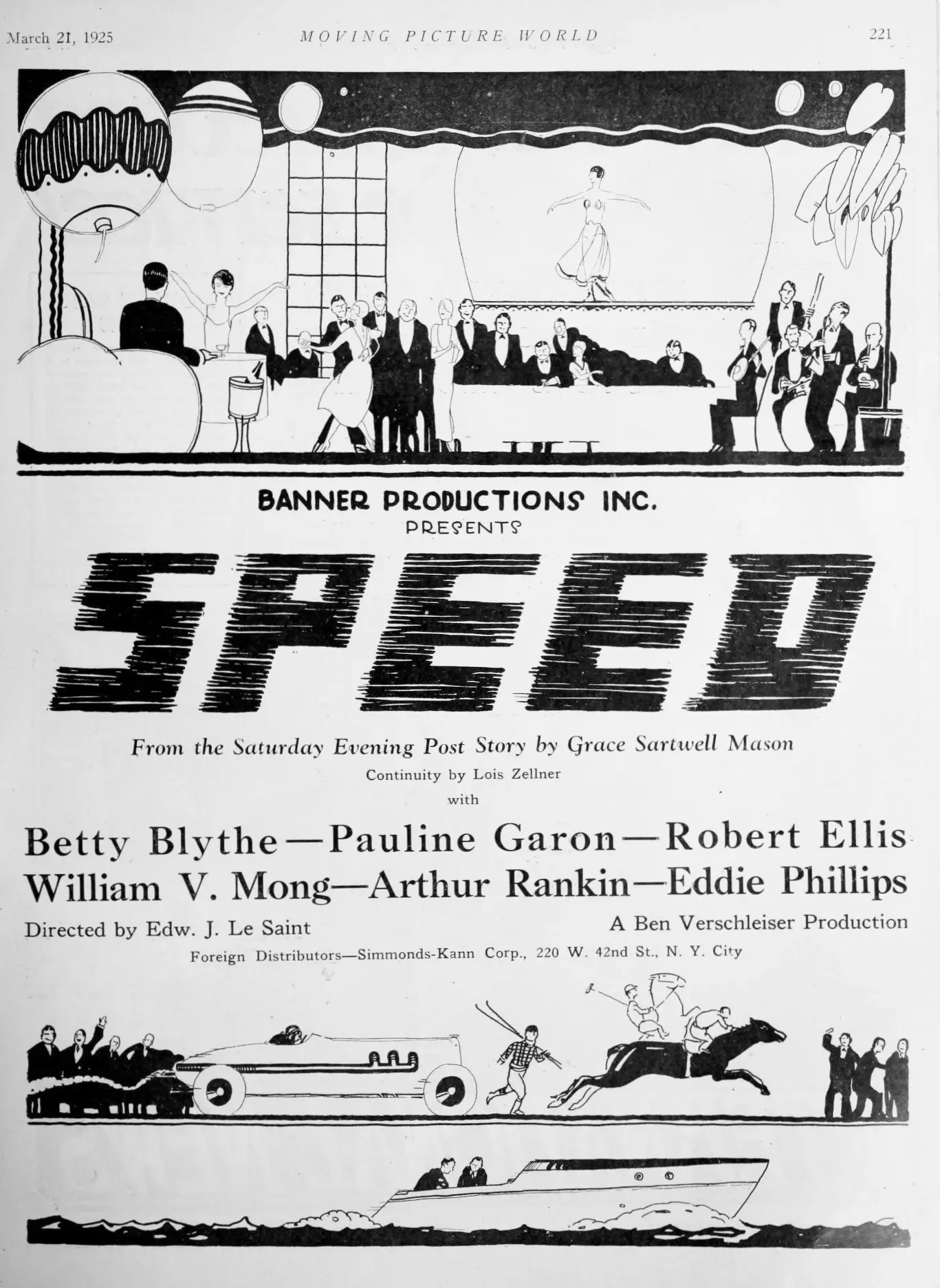
Visualizing the convergence of Edward LeSaint's style and the core Drama narrative.
Wiletta and Dick Whipple are jazz-mad children who follow the pursuit of pleasure recklessly: Wiletta is attracted by Jack Cartwright, a lounge lizard, and gives the cold shoulder to Nat Armstrong, a worthy fellow who loves her; Dick drinks too much. Their parents, Sam and Mary, go on a trip and return with a new car and new clothes. On a trip, the elder Whipples have become involved with the Querinos, Spanish crooks, who soon kidnap Wiletta. Nat and Sam give chase to the Querinos' car. Nat snatches Wiletta from the bandits' machine, and her father then runs it with its occupants over a cliff. Mutual reconciliation follows.
Decades after its release, Speed remains a vital piece of the cinematic puzzle. Its influence can be seen in countless modern works, solidifying Edward LeSaint's status as a master of the craft in United States and beyond.