
DbcultAccessing Vault...
Director's Spotlight
Senior Film Conservator
Director's Spotlight: United States
A Deep Dive into the 1917 Vision of Edward LeSaint
The cult DNA of The Golden Fetter is a reflection of United States's the subversive storytelling techniques employed by Edward LeSaint in 1917. Breaking the traditional rules of cult engagement, it leaves an indelible mark on the soul of the viewer.
In The Golden Fetter, Edward LeSaint pushes the boundaries of conventional narrative. The film's unique approach to its subject matter has sparked endless debates and interpretations among cinephiles and critics alike.
In this work, Edward LeSaint explores the intersection of cult and United States cultural identity. The meticulous attention to detail suggests a deep-seated commitment to pushing the boundaries of the medium, ensuring that The Golden Fetter remains a relevant topic of study for cult enthusiasts.
| Cinematography | Deep Focus |
| Soundtrack | Synth-Heavy |
| Editing | Disjunctive |
| Art Direction | Baroque |
Visualizing the convergence of Edward LeSaint's style and the core cult narrative.
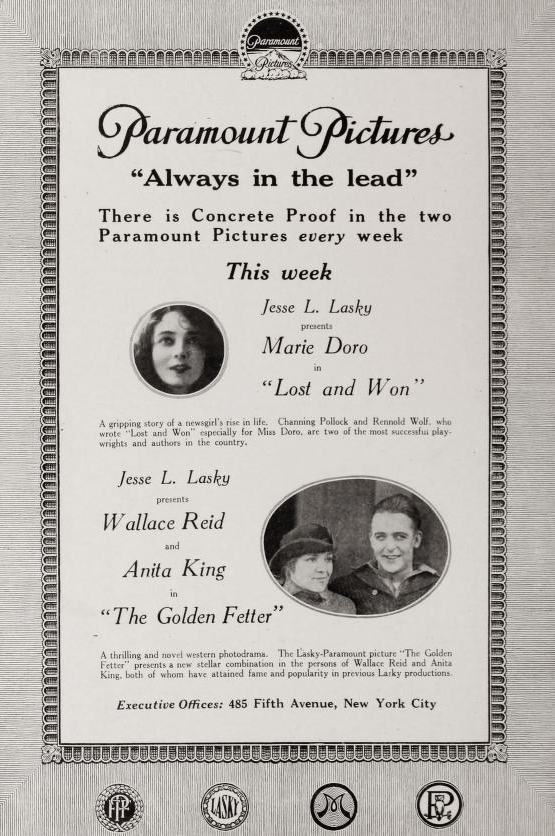
Schoolteacher Faith Miller inherits $10,000. Edson, McGill and Slade, three enterprising crooks, own the Moonflower, a worthless mine. Slade goes East to unload, and hearing of Faith's good fortune, he approaches her and finds her easy prey: she buys a share in the mine for $9,000. Advised by friends to take a rest, Faith goes to inspect her mine. Arriving at the town, she is insultingly approached and the man who has annoyed her is knocked down by Jim Ralston, a young mining engineer. She goes to the home of Big Annie, who tells her that the mine is worthless. The miners, touched by her beauty and helplessness, engage her to teach their school, the only available pupils being Pete, a half-wit, and Jim, who is held in connection with a hold-up committed by Edson and McGill. At first Jim rebels, but when he sees the teacher, he becomes a willing student. Faith recognizes him as her protector. Jim conceives the idea of salting the mine, and wires Slade to the effect that the mine is rich with silver and not to sell. Slade returns. Edson and McGill, pursued by a posse, reach the schoolhouse and persuade Jim to conceal them. Flynn, at the head of the posse, accuses Jim of hiding the bandits and is killed by a shot from an unseen hand. Jim is arrested as the murderer. Faith intercedes, begs him to flee and is handcuffed to him. They escape and take refuge in a mountain cabin. Jim shoots the fetter apart, breaking his wrist, and insists that Faith return home. As Jim tells Slade of Faith's whereabouts, Slade notices the fetter on his hand, takes him to the outskirts of the town and the miners prepare to bang him. Faith sells her interest in the mine back to Slade, and Pete, as he delivers a note to her from Jim, also tells Faith of Jim's peril. The outlaws, Edson and McGill, are shot as they resist arrest, Edson's dying confession of Flynn's murder reaching Jim's executioners just as they refuse to listen to Faith's pleading for her lover's life. Faith, weakened by the trying ordeals through which she has passed, sinks to the ground, only to be taken into the waiting arms of the man she loves.
Decades after its release, The Golden Fetter remains a vital piece of the cinematic puzzle. Its influence can be seen in countless modern works, solidifying Edward LeSaint's status as a master of the craft in United States and beyond.