
DbcultAccessing Vault...
Director's Spotlight
Senior Film Conservator
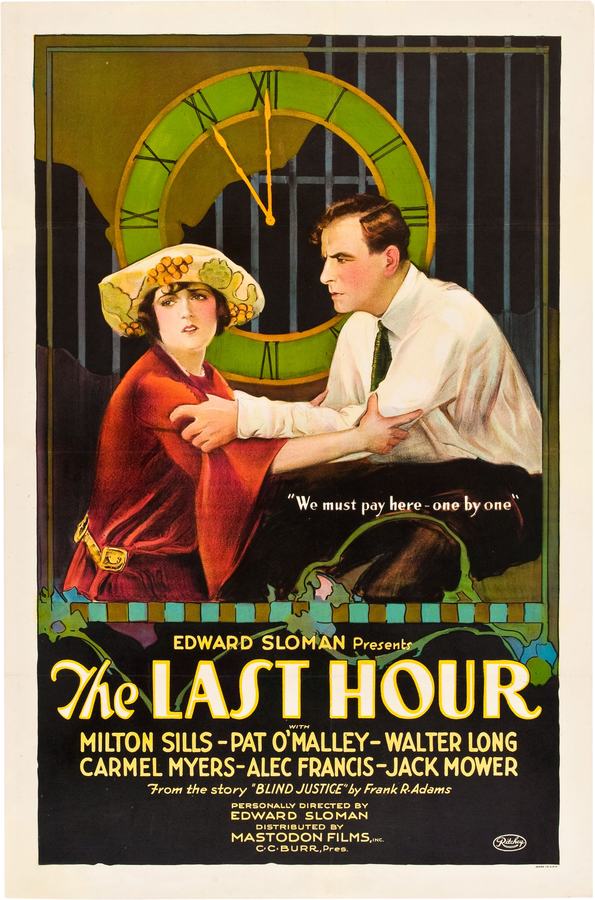
Director's Spotlight: United States
A Deep Dive into the 1923 Vision of Edward Sloman
Few works in United States cinema carry the same weight as The Last Hour, especially regarding the cultural zeitgeist captured so perfectly by Edward Sloman in 1923. Utilizing a 1923-specific aesthetic that remains timeless, it serves as a blueprint for future generations of Crime directors.
In The Last Hour, Edward Sloman pushes the boundaries of conventional narrative. The film's unique approach to its subject matter has sparked endless debates and interpretations among cinephiles and critics alike.
| Cinematography | Handheld |
| Soundtrack | Orchestral |
| Editing | Slow-Burn |
| Art Direction | Brutalist |
Visualizing the convergence of Edward Sloman's style and the core Crime narrative.
Reever McCall, an infamous forger, is on the run from the police with his daughter Saidee. He asks his friend, a former criminal named Steve Cline, for help. Cline, whose brother was killed by William Mallory, the detective chasing McCall, agrees. Several years later, while serving as a nurse during the war, Saidee falls in love with Phil Logan, a patient of hers who is also the son of the governor of her state. After the war Mallory, now a big shot in state politics, gives a banquet for the Governor. Mallory discovers Saidee's identity and demands that she marry him in exchange for keeping quiet about her past. Complications ensue.
Decades after its release, The Last Hour remains a vital piece of the cinematic puzzle. Its influence can be seen in countless modern works, solidifying Edward Sloman's status as a master of the craft in United States and beyond.