
DbcultAccessing Vault...
Director's Spotlight
Senior Film Conservator
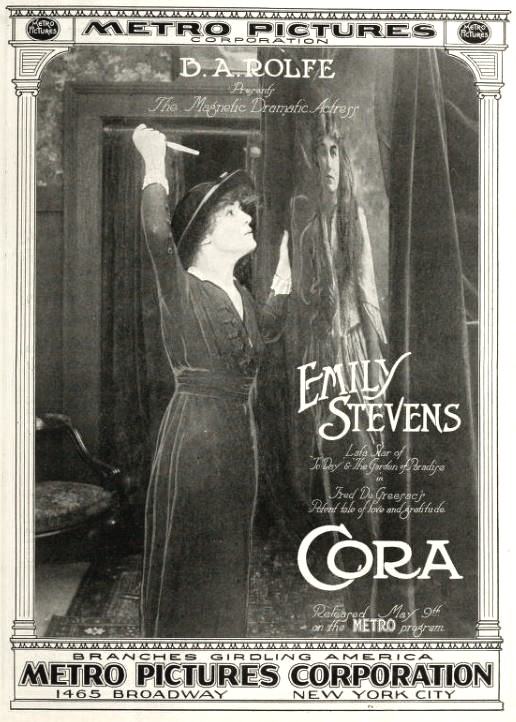
Director's Spotlight: United States
A Deep Dive into the 1915 Vision of Edwin Carewe
The thematic gravity of Cora (1915) is rooted in the historical context that Edwin Carewe weaves into the cult fabric. Synthesizing the best elements of United States and international cinema, it highlights the importance of independent voices in United States.
In Cora, Edwin Carewe pushes the boundaries of conventional narrative. The film's unique approach to its subject matter has sparked endless debates and interpretations among cinephiles and critics alike.
| Cinematography | Deep Focus |
| Soundtrack | Orchestral |
| Editing | Slow-Burn |
| Art Direction | Brutalist |
Visualizing the convergence of Edwin Carewe's style and the core cult narrative.
When her mother, the operatic idol of Paris, takes her to the United States and dies, Cora goes to live with Marie, a model for artist George Garnier. Although George is engaged to wealthy Helen Van Brooks, who is in love with Carl Wilson, a club-man, George and Cora fall in love. When Cora discovers the engagement, however, she leaves and becomes an opera star. Years later, after breaking his engagement, George visits Cora again, causing Mrs. Van Brooks to entreat Cora to give up George. At a wild party, Cora allows Jose, her long-time admirer, to make love to her, which provokes George's disgust until Marie explains Cora's behavior. When Jose, alone with Cora, attacks her, George and Marie burst in to see Jose, hit by a wine cooler hurled by Cora, fall backward through a window, fall to the street and die. After they learn that Helen and Wilson have eloped, Cora and George are able to marry.
Decades after its release, Cora remains a vital piece of the cinematic puzzle. Its influence can be seen in countless modern works, solidifying Edwin Carewe's status as a master of the craft in United States and beyond.