
DbcultAccessing Vault...
Director's Spotlight
Senior Film Conservator
Director's Spotlight: United States
A Deep Dive into the 1915 Vision of Edwin Carewe
Deciphering the layers of The House of Tears (1915) reveals a monumental shift in cult filmmaking spearheaded by Edwin Carewe. With its avant-garde structure and atmospheric tension, offering layers of thematic complexity that demand repeated viewing.
In The House of Tears, Edwin Carewe pushes the boundaries of conventional narrative. The film's unique approach to its subject matter has sparked endless debates and interpretations among cinephiles and critics alike.
The visual language of The House of Tears is defined by its use of shadows and framing, a hallmark of Edwin Carewe's style. By utilizing a 1915-era palette, the film creates an immersive experience that perfectly complements its cult themes.
| Cinematography | Handheld |
| Soundtrack | Synth-Heavy |
| Editing | Rhythmic |
| Art Direction | Naturalist |
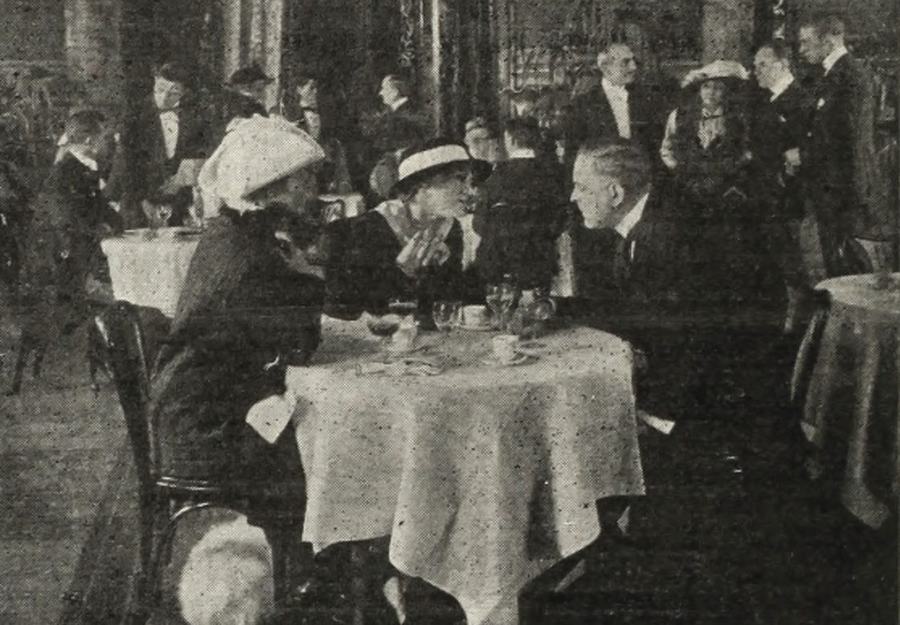
Visualizing the convergence of Edwin Carewe's style and the core cult narrative.
In the House of Tears, there lived Robert Collingwood, his wife, Alice Collingwood, and their baby girl, Gail. In the courts Robert has been granted a decree of divorce and the custody of little Gail, upon evidence that Mrs. Collingwood has been found in a compromising situation with Henry Thorne, and her subsequent admissions. Once free, Mrs. Collingwood openly accepts the attention of Thorne, and they soon marry and go west to live. Thorne takes up the life of a prospector in a mining community, and his consistent failure proves a source of discouragement to him and unhappiness to the woman. Collingwood, his mind upset by domestic troubles, loses his fortune in Wall Street manipulation, and becomes a raving maniac. He drives his employees out of the office, and then goes to his home intending to kill his little daughter. In a chase up a staircase, he falls and is killed. An annuity he had settled on the baby when she was born, and which has been saved from the financial wreck, is the means of her education. Fifteen years later Thorne, who has been plodding along in the west, meeting with little success, wins $15,000 at faro in a desperate plunge one night. He has become tired of the woman he won by intrigue and his sudden prosperity turns his head. He arranges to go back to Wall Street to flirt with fortune, and he tells his wife he will not take her along, but will leave enough money for her to live on. She is horrified at the prospects of his desertion, and at the point of a revolver, demands his money. In a struggle which ensues, she is seriously wounded. Thorne leaves, believing his wife dead by the shot from her own hand. Back in Wall Street, Thorne electrifies other operators by his phenomenal rise to affluence, and he becomes the elegant man of wealth he aspired to be. Gail Collingwood, who has now grown to womanhood, is known under the name of Alice Gail, and employed as a reporter on the Evening News. She is sent to interview Thorne, who is now known as "Edward North." They become very friendly and their acquaintance soon ripens into love. In due time their betrothal is announced. Out in the mining town Thorne's wife has recovered, and she resolves to come back to the scenes of her youth. She is seeking Thorne in the great city, when Gail, who is riding in an automobile loaned her by her fiancé, runs down her mother, a poor, ill-clad, wandering woman. The mother is slightly injured, and she recognizes her daughter. They plan to make "North" face his past. Gail sends word for "North" to come to her home, as she is in trouble. When he arrives he is brought face to face with his wife, whom he believed to be dead. "North" becomes frenzied from fear, as he thinks the sad faced woman is an apparition, and he flees from the house. The apparition continues to haunt him, and in a half-crazed mood he drives his automobile blindly through the streets, ending by running off a bridge when he is hurled to death. Mother and daughter, re-united, then seek a happier existence.
Decades after its release, The House of Tears remains a vital piece of the cinematic puzzle. Its influence can be seen in countless modern works, solidifying Edwin Carewe's status as a master of the craft in United States and beyond.