
DbcultAccessing Vault...
Director's Spotlight
Senior Film Conservator
Director's Spotlight: United States
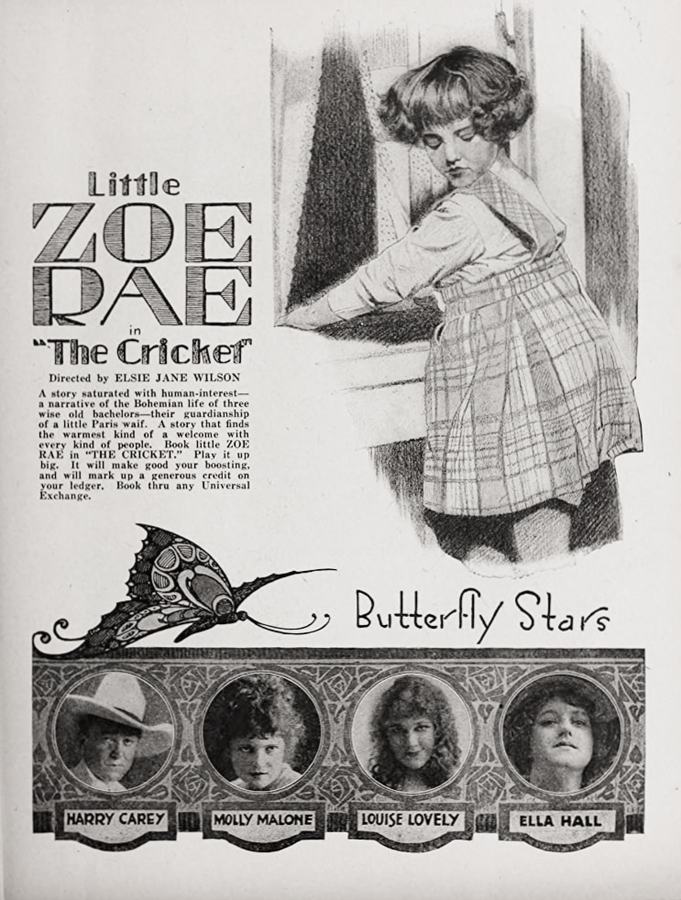
A Deep Dive into the 1917 Vision of Elsie Jane Wilson
The brilliance of The Cricket (1917) is inseparable from the visionary mind of its creator, Elsie Jane Wilson. Serving as a mirror to the anxieties of a changing world, it persists as a haunting reminder of our own cinematic history.
In The Cricket, Elsie Jane Wilson pushes the boundaries of conventional narrative. The film's unique approach to its subject matter has sparked endless debates and interpretations among cinephiles and critics alike.
| Cinematography | Noir-Inspired |
| Soundtrack | Synth-Heavy |
| Editing | Disjunctive |
| Art Direction | Baroque |
Visualizing the convergence of Elsie Jane Wilson's style and the core cult narrative.
Spurred on by her young actor friend Pascal, Cricket, a young girl, accepts the starring role in a juvenile play. Her smashing success is overshadowed, however, by her mother's death. Orphaned, Cricket grows to adulthood under the tutelage of her artist friends Saveline, Pinglet, and Caesar. Their idyllic family life ends when the three foster fathers decide that Cricket shall marry a banker's son, while she is determined to marry her old friend Pascal. Cricket leaves her foster fathers for Pascal and their estrangement endures several years, until the three men attend a stage performance given by Pascal and Cricket. An usher asks if they would take care of one of the actor's children and, recognizing Cricket's daughter, their old feelings of friendship are rekindled and a reconciliation occurs.
Decades after its release, The Cricket remains a vital piece of the cinematic puzzle. Its influence can be seen in countless modern works, solidifying Elsie Jane Wilson's status as a master of the craft in United States and beyond.