
DbcultAccessing Vault...
Director's Spotlight
Senior Film Conservator
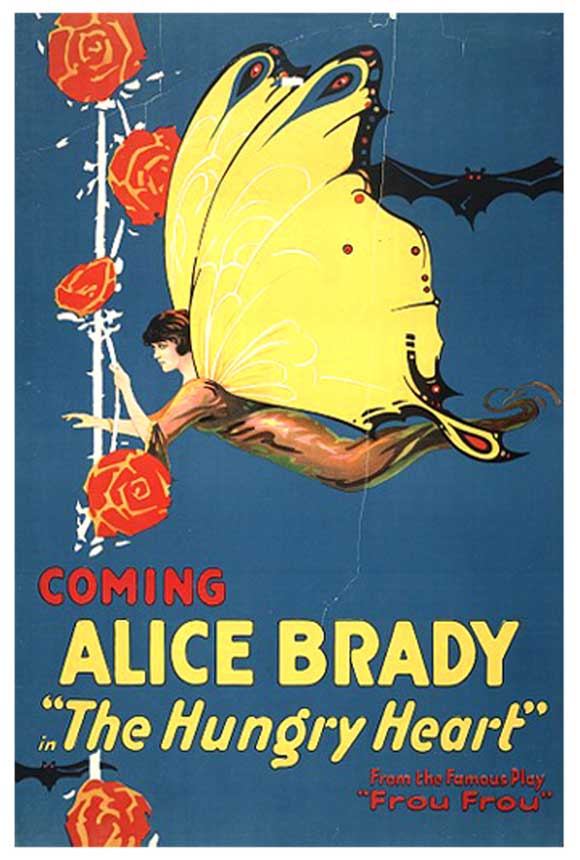
Director's Spotlight: United States
A Deep Dive into the 1917 Vision of Emile Chautard
Witnessing the stylistic transformation of cult through A Hungry Heart reveals the provocative questions that Emile Chautard poses to the United States audience. Exploring the nuances of the human condition with cult flair, it showcases the power of cult as a tool for social commentary.
In A Hungry Heart, Emile Chautard pushes the boundaries of conventional narrative. The film's unique approach to its subject matter has sparked endless debates and interpretations among cinephiles and critics alike.
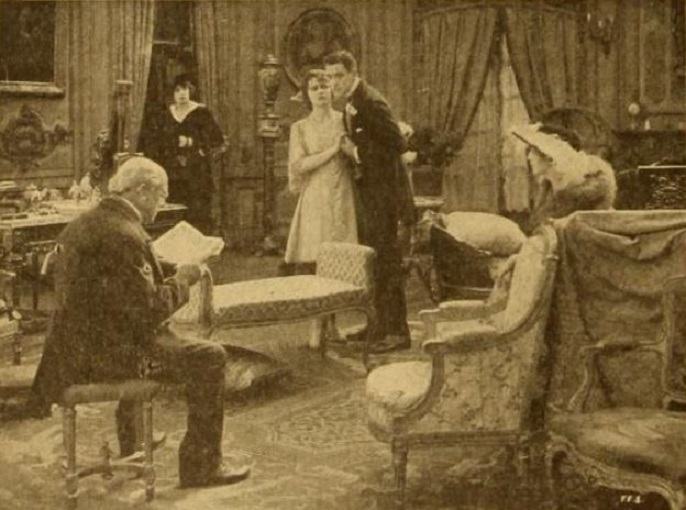
To fully appreciate A Hungry Heart, one must consider the cinematic climate of 1917. During this period, United States was undergoing significant artistic shifts, and Emile Chautard was at the forefront of this cult movement, often challenging established norms.
| Cinematography | Noir-Inspired |
| Soundtrack | Synth-Heavy |
| Editing | Disjunctive |
| Art Direction | Baroque |
Visualizing the convergence of Emile Chautard's style and the core cult narrative.
Vivacious little Gilberte, known as Frou Frou, is the daughter of M. Brigard, a retired merchant, who has as his companion in a life of gaiety, Comte Paul de Valreas, a much younger man. Both the Count and Henry de Sartorys are in love with Frou Frou, and when De Sartorys asks for the hand of Frou Frou, M. Brigard refers him to Louise, the elder daughter, who is in charge of the household. To Louise, who loves de Sartorys, comes the first anguish of her life, when he confides his love for Frou Frou. However, she confers with her little sister who agrees to marry De Sartorys. Paul also asks for Frou Frou's hand, but Brigard refuses, stating he is too jolly a companion to be trusted as a son-in-law. Five years pass, and although Frou Frou adores her son Georgie, the calm role of a homemaker does not suit her, and on one of Louise's visits she realizes her own place has been usurped, as both De Sartorys and Georgie go to her for advice. Paul still loves Frou Frou, but she fights against her growing attraction for him, and begs him to go away. Finding she is no longer necessary for the happiness of her husband and son, after a furious tirade against Louise, she leaves and joins Paul in Venice. Paul's mother receives her, and the next day, De Sartorys, who has followed, finds her, and despite her pleas, fights a duel with Paul, in which Paul is killed. Out of the loneliness and sorrow of the ensuing months her soul is chastened, and she returns to ask her husband one last favor, that she be allowed to die in the house she entered as a bride. Although Louise also pleads for her he at first refuses; but when Frou Frou, formerly so light-hearted and care-free, pleads on her knees, he can no longer deny her, and the two meet in a tearful embrace. Her life closes with a semblance of happiness, as she gives to Louise the two that are closest to her, her husband and son.
Decades after its release, A Hungry Heart remains a vital piece of the cinematic puzzle. Its influence can be seen in countless modern works, solidifying Emile Chautard's status as a master of the craft in United States and beyond.