
DbcultAccessing Vault...
Director's Spotlight
Senior Film Conservator
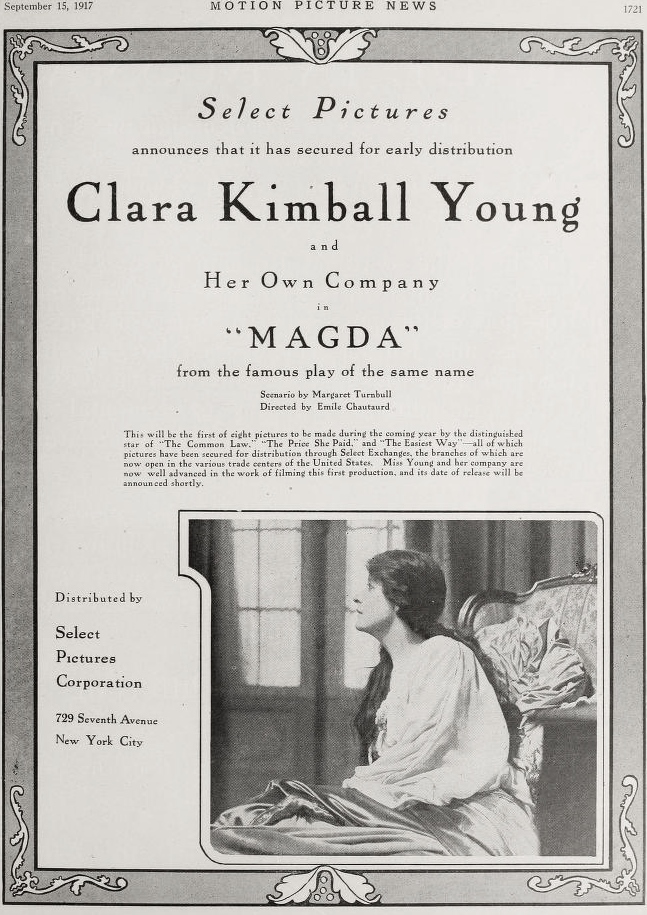
Director's Spotlight: United States
A Deep Dive into the 1917 Vision of Emile Chautard
Witnessing the stylistic transformation of cult through Magda reveals the provocative questions that Emile Chautard poses to the United States audience. Exploring the nuances of the human condition with cult flair, it showcases the power of cult as a tool for social commentary.
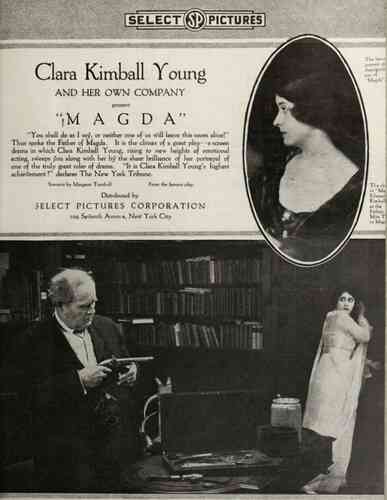
In Magda, Emile Chautard pushes the boundaries of conventional narrative. The film's unique approach to its subject matter has sparked endless debates and interpretations among cinephiles and critics alike.
| Cinematography | Handheld |
| Soundtrack | Minimalist |
| Editing | Disjunctive |
| Art Direction | Baroque |
Visualizing the convergence of Emile Chautard's style and the core cult narrative.
Young Magda is stifled by the regimentation and provincial thinking of the small village she grew up in, and the result is that her parents throw her out of the house. Determined to make her own way, she heads to the big city to be a professional singer. There she falls in love with a cad named Kellner and marries him, only to discover that the marriage was phony and now she's alone and has a child to support. She's reduced to singing in seamy dance halls and even on the street until one day her former singing teacher hears her and takes her under his wing. Her problems aren't over, however--her father still wants nothing to do with her, and now her phony "husband" Kellner shows up.
Decades after its release, Magda remains a vital piece of the cinematic puzzle. Its influence can be seen in countless modern works, solidifying Emile Chautard's status as a master of the craft in United States and beyond.