
DbcultAccessing Vault...
Director's Spotlight
Senior Film Conservator
Director's Spotlight: United States
A Deep Dive into the 1917 Vision of Emile Chautard
When we examine the cinematic landscape of United States, The Family Honor emerges as a landmark work of the enduring legacy of Emile Chautard's artistic contribution to the genre. Through a lens of existential fatalism and cult tropes, it captures a specific kind of cinematic magic that is rarely replicated.
In The Family Honor, Emile Chautard pushes the boundaries of conventional narrative. The film's unique approach to its subject matter has sparked endless debates and interpretations among cinephiles and critics alike.
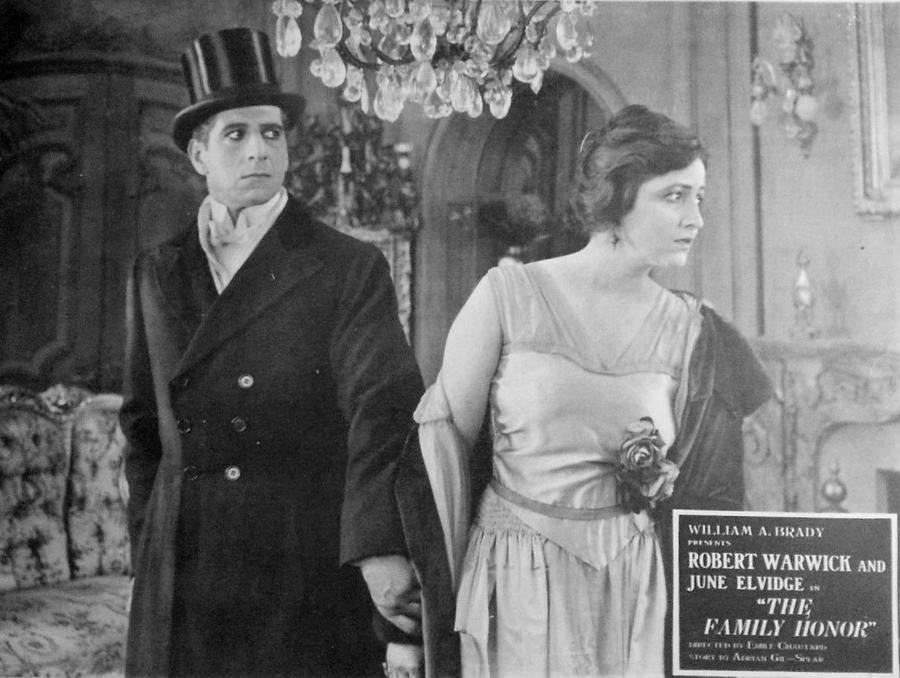
While deeply rooted in United States, The Family Honor has achieved a global reach, influencing directors from various backgrounds. Its ability to translate cult tropes into a universal cinematic language is why it remains a cult staple decades after its 1917 release.
| Cinematography | Static |
| Soundtrack | Minimalist |
| Editing | Slow-Burn |
| Art Direction | Brutalist |
Visualizing the convergence of Emile Chautard's style and the core cult narrative.
General Wayne, a proud old American patriot, and his two sons: Captain Stephen Wayne, an army officer, and Anthony Wayne, a successful young portrait painter, valiantly maintain the tradition of the Wayne family honor. Anthony is engaged to Doris Leighton, a girl of refinement, but he becomes infatuated with Marcia Quesnay, emotional actress and enchantress. He disgraces his family by his devotion to her, and, lured on by her demands, abandons his promising career. Stephen Wayne, meeting her in an endeavor to compel her to release Anthony from his unfortunate entanglement, falls sincerely in love with her and she with him. Later, with the dawning of this first real love of her life. Marcia renounces her butterfly life and becomes a tender and self-sacrificing woman. She returns all of Anthony's gifts, giving them to Stephen for safe keeping. In order to disillusion Anthony she causes him to believe she is only a common woman and he turns from her in disgust. Led on by Eric Mainwaring, an actor in love with Marcia, who tells Anthony that Marcia is a woman to be bought and not loved, Anthony is persuaded to steal from his father's safe government funds placed there by Stephen, and is cheated of the money at cards by Eric. Stephen, discovering the theft, goes to Marcia's apartment to confront her with the result of her influence over Anthony, and is there in time to rescue her from Eric, who comes with the money he has cheated from Anthony, to persuade Marcia to go abroad with him. Stephen forces Eric to disgorge the stolen funds and to leave in fear o£ the authorities. The following morning Anthony, penniless, an outcast and a thief, is saved from committing suicide by Doris. His father discovering the theft and accusing Anthony, urges him on to suicide, telling his son that honorable death is better than a life of dishonor. Stephen arrives with Marcia in time to avert the tragedy, telling a lie to save Anthony in the eyes of his father and Doris, that it was he (Stephen) who took the money from the safe, at the same time producing the bills to substantiate his claim. A general reconciliation follows. When his father sees Marcia standing beside Stephen he fears that this other son has been ensnared, but Stephen tells them that they have all misjudged her, and that she is going to enhance the family honor by becoming his wife.
Decades after its release, The Family Honor remains a vital piece of the cinematic puzzle. Its influence can be seen in countless modern works, solidifying Emile Chautard's status as a master of the craft in United States and beyond.