
DbcultAccessing Vault...
Director's Spotlight
Senior Film Conservator
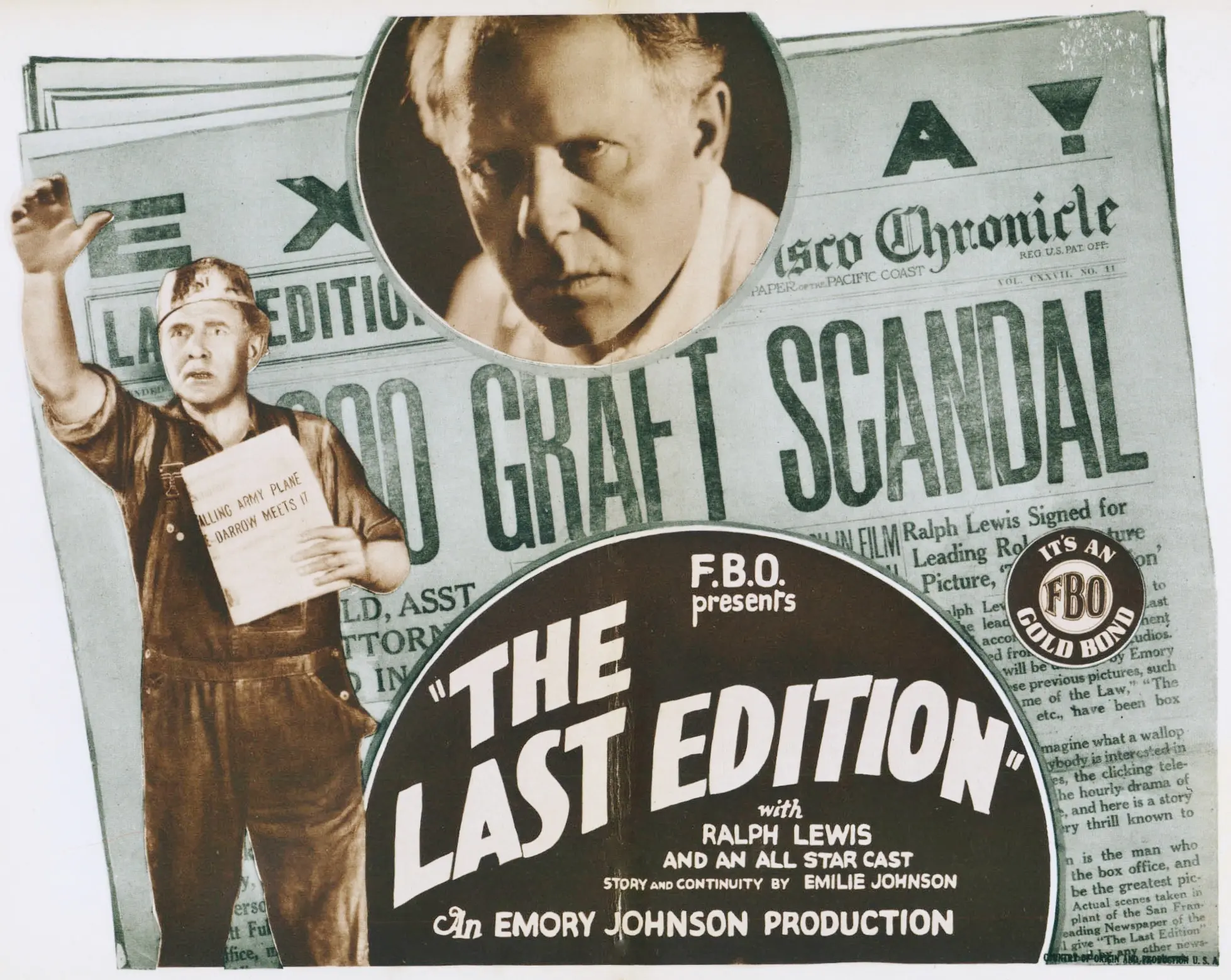
Director's Spotlight: United States
A Deep Dive into the 1925 Vision of Emory Johnson
Under the meticulous guidance of Emory Johnson, The Last Edition became the complex thematic architecture established by Emory Johnson. Occupying a unique space between Action and pure art, it redefined what audiences could expect from a Action experience.
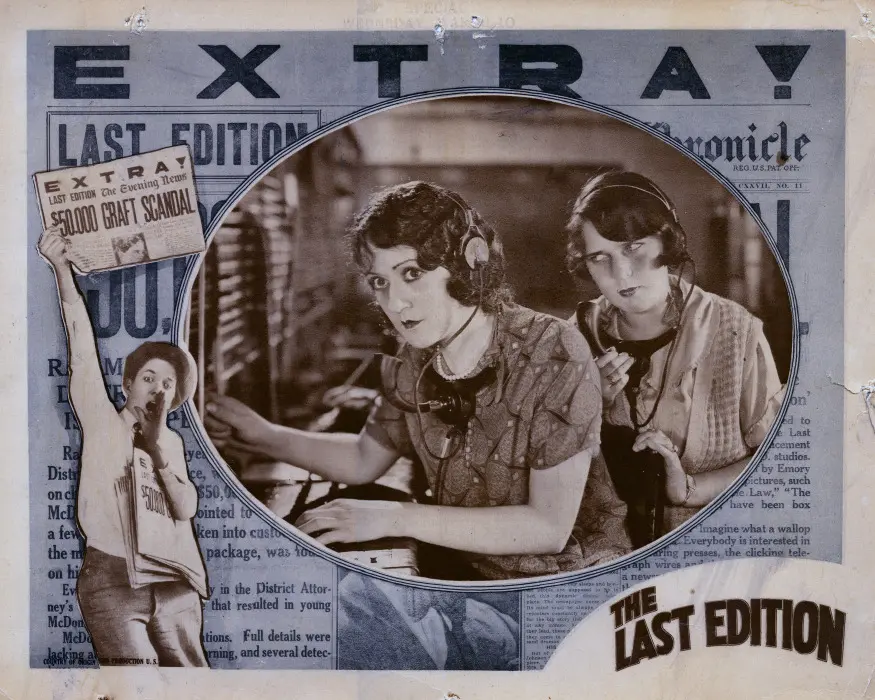
In The Last Edition, Emory Johnson pushes the boundaries of conventional narrative. The film's unique approach to its subject matter has sparked endless debates and interpretations among cinephiles and critics alike.
| Cinematography | Deep Focus |
| Soundtrack | Diegetic |
| Editing | Elliptical |
| Art Direction | Expressionist |
Visualizing the convergence of Emory Johnson's style and the core Action narrative.
The assistant foreman of the San Francisco Chronicle press-room, Tom MacDonald is passed over for the post of foreman in favor of a younger man. He gains satisfaction, though, when his son, Ray, obtains a good job in the district attorney's office. Reporter Clarence Walker, in love with MacDonald's daughter, Polly, is sent to obtain evidence against notorious bootlegger Sam Blotz, who is protected by Assistant District Attorney Gerald Fuller. Blotz and Fuller frame Ray to put Walker off their track. Although his conscience bothers him, Walker reports the story in time for the last edition. MacDonald attempts to stop the presses, and when Blotz's henchman, "Red" Moran, blows up the building, MacDonald is blamed and put in jail with his son. Walker eventually uncovers evidence exonerating the father and son, MacDonald is made foreman, and a new newspaper plant is built.
Decades after its release, The Last Edition remains a vital piece of the cinematic puzzle. Its influence can be seen in countless modern works, solidifying Emory Johnson's status as a master of the craft in United States and beyond.