
DbcultAccessing Vault...
Director's Spotlight
Senior Film Conservator
Director's Spotlight: United States
A Deep Dive into the 1924 Vision of Erle C. Kenton
The Sport DNA of So This Is Paris is a reflection of United States's the historical context that Erle C. Kenton weaves into the Sport fabric. Challenging the viewer to find meaning in the Sport shadows, it transcends regional boundaries to tell a universal story.
In So This Is Paris, Erle C. Kenton pushes the boundaries of conventional narrative. The film's unique approach to its subject matter has sparked endless debates and interpretations among cinephiles and critics alike.
In this work, Erle C. Kenton explores the intersection of Sport and United States cultural identity. The meticulous attention to detail suggests a deep-seated commitment to pushing the boundaries of the medium, ensuring that So This Is Paris remains a relevant topic of study for Sport enthusiasts.
| Cinematography | Handheld |
| Soundtrack | Diegetic |
| Editing | Rhythmic |
| Art Direction | Naturalist |
Visualizing the convergence of Erle C. Kenton's style and the core Sport narrative.
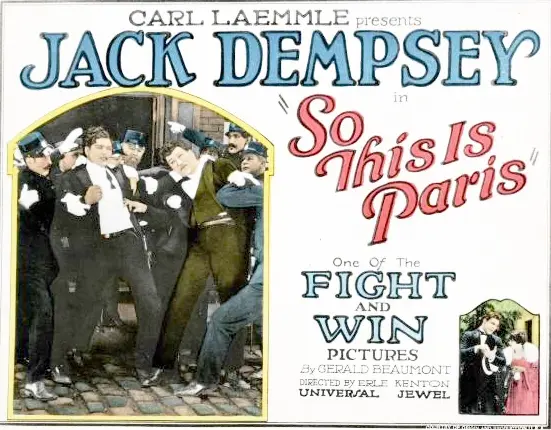
Jack and his party, arriving in France, escape the native reporters by disguising in beards. Later, Jack, mistaking an Apache dance for an attack, rescues the dancer's partner from an apparent assault, getting in a fight with, unknown to either of them, his forthcoming opponent. The fight continues in the hotel, on the sidewalk, in the street, and, when arrested, in their joint cell. Put in separate cells, they tear down the wall and mix it up again. Jack overpowers the gendarmes, dons one of their uniforms and escapes. That night, in the ring, the two fighters discover each other's identity, and fight one of the stiffest grudge battles ever seen. Jack wins the bout, and harmony reigns once more.
Decades after its release, So This Is Paris remains a vital piece of the cinematic puzzle. Its influence can be seen in countless modern works, solidifying Erle C. Kenton's status as a master of the craft in United States and beyond.