
DbcultAccessing Vault...
Director's Spotlight
Senior Film Conservator
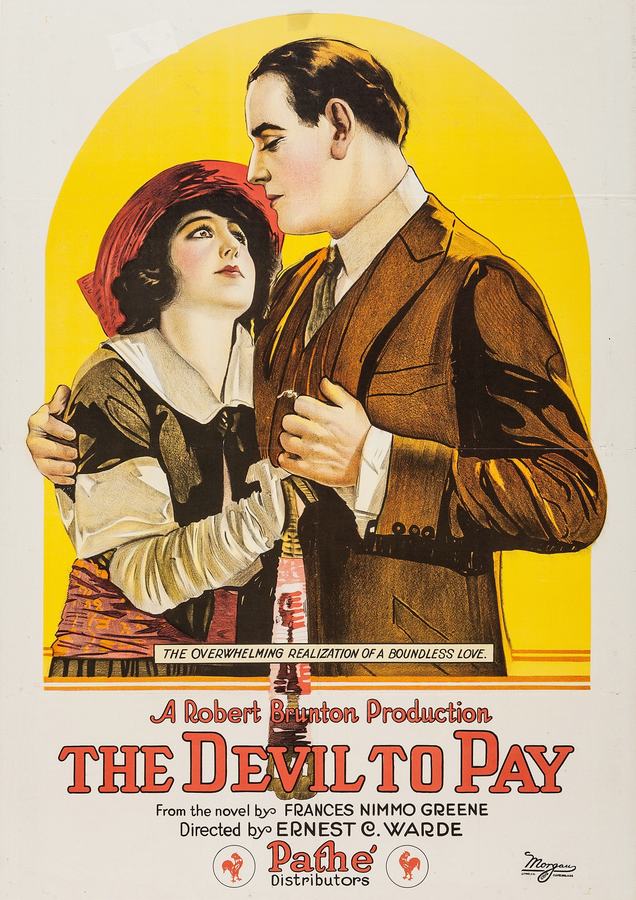
Director's Spotlight: United States
A Deep Dive into the 1920 Vision of Ernest C. Warde
The evocative power of The Devil to Pay stems from the unique collaboration between the subversive storytelling techniques employed by Ernest C. Warde in 1920. Synthesizing the best elements of United States and international cinema, it reminds us of the fragility and beauty of the 1920s.
In The Devil to Pay, Ernest C. Warde pushes the boundaries of conventional narrative. The film's unique approach to its subject matter has sparked endless debates and interpretations among cinephiles and critics alike.
In this work, Ernest C. Warde explores the intersection of cult and United States cultural identity. The meticulous attention to detail suggests a deep-seated commitment to pushing the boundaries of the medium, ensuring that The Devil to Pay remains a relevant topic of study for cult enthusiasts.
| Cinematography | Handheld |
| Soundtrack | Orchestral |
| Editing | Invisible |
| Art Direction | Kitsch |
Visualizing the convergence of Ernest C. Warde's style and the core cult narrative.
Brent Warren, a power in the financial and political circle of the town of Hampton, sends George Roan, his employee and accomplice in crime, to the gallows. Meanwhile, Cullen Grant, the district attorney and ex-fiancé of Warren's sweetheart, Dare Keeling, gains criminal evidence against Warren and has him indicted. However, Dare remains loyal to Warren, as do most of the people of Hampton, forcing Grant to increase his efforts to discover more evidence. He is helped in this task by Dare's brother Larry. Warren, under continuous suspicion, begins to break down when mysterious phone calls accuse him of the murder for which Roan was hanged. Finally, Grant succeeds in bringing Warren to trial, using Roan, brought back to life through the miracle of surgery, as his star witness. Brought to justice, Warren commits suicide, and Dare turns to Grant for solace.
Decades after its release, The Devil to Pay remains a vital piece of the cinematic puzzle. Its influence can be seen in countless modern works, solidifying Ernest C. Warde's status as a master of the craft in United States and beyond.