
DbcultAccessing Vault...
Director's Spotlight
Senior Film Conservator
Director's Spotlight: United States
A Deep Dive into the 1920 Vision of Ernest C. Warde
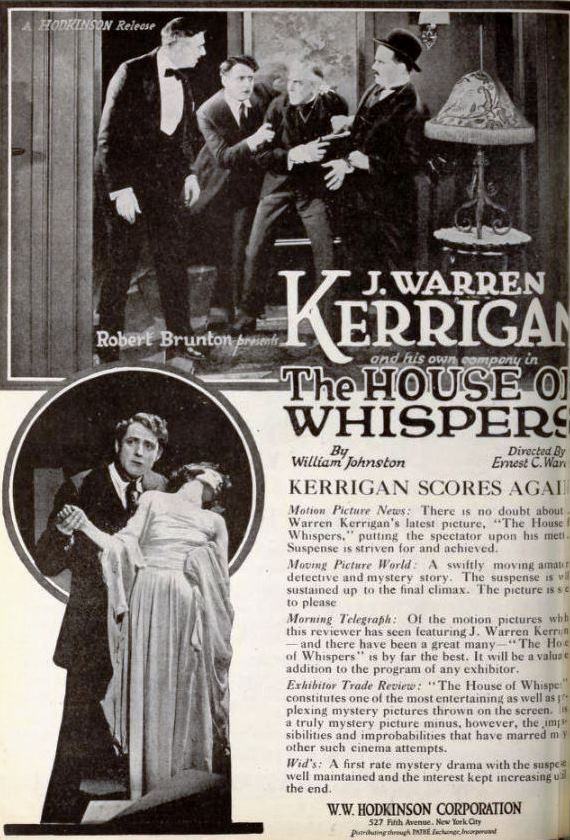
Few works in United States cinema carry the same weight as The House of Whispers, especially regarding the cultural zeitgeist captured so perfectly by Ernest C. Warde in 1920. Utilizing a 1920-specific aesthetic that remains timeless, it serves as a blueprint for future generations of cult directors.
In The House of Whispers, Ernest C. Warde pushes the boundaries of conventional narrative. The film's unique approach to its subject matter has sparked endless debates and interpretations among cinephiles and critics alike.
While deeply rooted in United States, The House of Whispers has achieved a global reach, influencing directors from various backgrounds. Its ability to translate cult tropes into a universal cinematic language is why it remains a cult staple decades after its 1920 release.
| Cinematography | High-Contrast |
| Soundtrack | Synth-Heavy |
| Editing | Disjunctive |
| Art Direction | Baroque |
Visualizing the convergence of Ernest C. Warde's style and the core cult narrative.
Spaulding Nelson moves into an apartment after his uncle has been driven from it by the sounds of screams and whispers. Upon undertaking an investigation, he meets neighbor Barbara Bradford, whose sister Clara is being tormented by the recurring sounds of her dead husband Roldo's voice. Roldo is actually alive and an accomplice of Henry Kent who built "the house of whispers" and riddled it with secret passageways which enabled him to gain entry to the apartments. Spaulding locates the secret panel doors, but is arrested on suspicion of murdering actress Daisy Luton, a victim of Roldo. Eluding the detectives, Spaulding escapes through the panel and down a secret passageway where he corners Kent, Roldo and Nettie Kelly, Roldo's first wife. After Nettie confesses, Clara is freed to marry her fiancé and Barbara accepts Spaulding's proposal.
Decades after its release, The House of Whispers remains a vital piece of the cinematic puzzle. Its influence can be seen in countless modern works, solidifying Ernest C. Warde's status as a master of the craft in United States and beyond.