
DbcultAccessing Vault...
Director's Spotlight
Senior Film Conservator
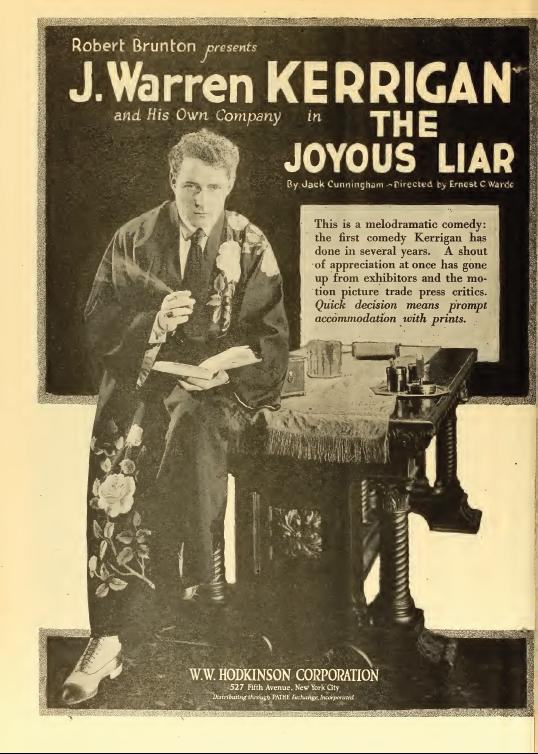
Director's Spotlight: United States
A Deep Dive into the 1919 Vision of Ernest C. Warde
The brilliance of The Joyous Liar (1919) is inseparable from a monumental shift in cult filmmaking spearheaded by Ernest C. Warde. Occupying a unique space between cult and pure art, it serves as a blueprint for future generations of cult directors.
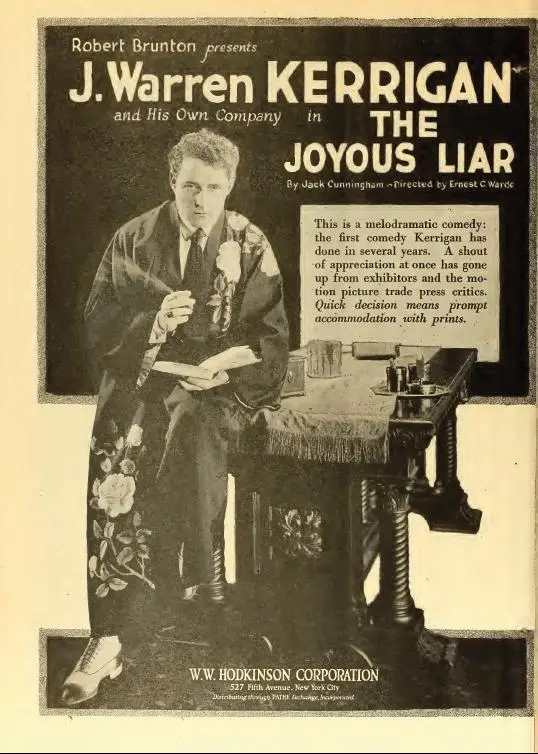
In The Joyous Liar, Ernest C. Warde pushes the boundaries of conventional narrative. The film's unique approach to its subject matter has sparked endless debates and interpretations among cinephiles and critics alike.
| Cinematography | High-Contrast |
| Soundtrack | Synth-Heavy |
| Editing | Disjunctive |
| Art Direction | Baroque |
Visualizing the convergence of Ernest C. Warde's style and the core cult narrative.
Burke Harlan an artist, saves Anne Warren from auto thieves, but he is wrongfully arrested and accused of stealing her car. The girl's father is a criminologist and has Harlan released into his custody as he would like to try to reform the young man. Harlan finds this highly amusing and goes along with the idea, mainly because it will allow him to be nearer lovely Anne. He does his best at convincing he is a delinquent, however Anne has a beau who is the police commissioner. But the clever Harlan outwits everyone and elopes with Anne before revealing his true identity.
Decades after its release, The Joyous Liar remains a vital piece of the cinematic puzzle. Its influence can be seen in countless modern works, solidifying Ernest C. Warde's status as a master of the craft in United States and beyond.