
DbcultAccessing Vault...
Director's Spotlight
Senior Film Conservator
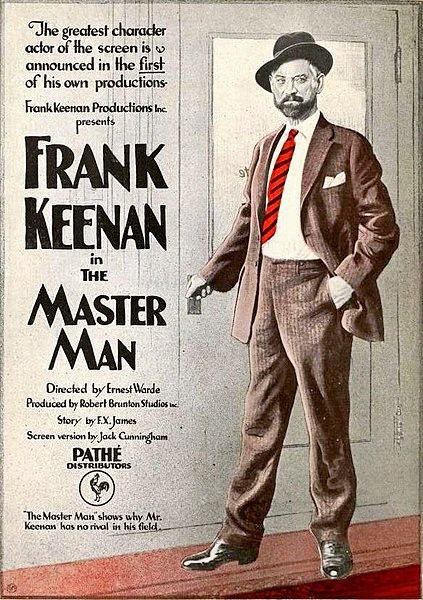
Director's Spotlight: United States
A Deep Dive into the 1919 Vision of Ernest C. Warde
The artistic breakthrough represented by The Master Man in 1919 highlights the philosophical inquiries that Ernest C. Warde embeds within the narrative. Framed by the hauntingly beautiful landscapes of the production, it leaves an indelible mark on the soul of the viewer.
In The Master Man, Ernest C. Warde pushes the boundaries of conventional narrative. The film's unique approach to its subject matter has sparked endless debates and interpretations among cinephiles and critics alike.
In this work, Ernest C. Warde explores the intersection of cult and United States cultural identity. The meticulous attention to detail suggests a deep-seated commitment to pushing the boundaries of the medium, ensuring that The Master Man remains a relevant topic of study for cult enthusiasts.
| Cinematography | Handheld |
| Soundtrack | Diegetic |
| Editing | Rhythmic |
| Art Direction | Naturalist |
Visualizing the convergence of Ernest C. Warde's style and the core cult narrative.
Attorney General Emanuel Blake, who controls the state's political machine, sends McCullough Davenport to steal a document from Governor Wheeler that can ruin Blake and iron magnate George R. Vanter. After Davenport kills the governor, Blake arranges evidence to pin the murder on State Senator Mitchell Murray. When Vanter marries his ward, Janice Ritter, whom both Blake and Murray love, Janice's father, in a crazed state, poisons Vanter. To defeat Murray's labor bill, Blake leaks his "evidence" concerning Murray, but during questioning, Davenport implicates Blake. Blake has himself committed to a sanitarium run by his cohorts, and he leaves when they report his death. While working at the iron mill, Blake learns about the worker's life. When Janice is tried for murdering Vanter, Blake pulls strings to become a juror, and after seeing a vision, he acknowledges his responsibility for Wheeler's murder and proves Janice's innocence. Although Janice wants him to escape with her, Blake says he has to pay his debt to society, and urges her to help working people.
Decades after its release, The Master Man remains a vital piece of the cinematic puzzle. Its influence can be seen in countless modern works, solidifying Ernest C. Warde's status as a master of the craft in United States and beyond.